

It's a new year, and that means new goals! If one of your goals for 2025 is to try to save money, reduce waste and keep your food fresh for longer (or do some level of meal prepping), you're in luck: Every season is leftover season with the right gear.
Plus, if you’ve ever packed a school or work lunch, you know that having good containers is a game changer. They help prevent leaks, spills, BPA contamination, melting in the microwave or dishwasher, mold accumulation in hard-to-reach crevices and other unnecessary headaches.
Having good storage containers for pantry items is also important. The right containers will keep your dry ingredients in good shape for longer, whereas sub-par containers will allow dry goods to spoil or lose flavor and nutrition quickly.
So how do you separate the high-quality ones from the mediocre? Read on to find out how to choose the best storage containers for your needs, and see our 18 top picks for storing leftovers, meal-prepped food, pantry items and more. Or, use the links below to jump to a specific category.
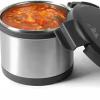 Best with insulation$undefined$19.99
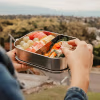 Ideal for lunches$27.99$27.99
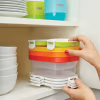 Simple storage$undefined$29.99
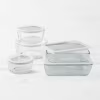 Chef-approved$79.95$79.95


Best food storage containers, according to chefs

Material: Molded polypropylene | Number of Containers: 1
If you need some more organization in your kitchen, these containers from décor are great options because they come with labels that clip to the side and feature clear bottoms so you can easily see (and read) what you have in them.
Pastry chef Meg Galus is always looking for containers that can hold "both dry storage like flour, sugar and also fridge items." These containers are air-tight so they are fridge and pantry-safe.


Material: Silicone | Number of Containers: 1
In addition to glass and non-toxic plastic containers, “I also like re-usable silicone bags for food storage,” Carla Hall, a Top Chef says. Stasher’s bags, which come in varying sizes and shapes, have been raved about by pros and home cooks alike for a reason.
One is their versatility. Aside from being colorful way to store food in the fridge or to pack lunch and snacks to work, these BPA-free silicone bags are safe to cook with in temperatures of up to 425 degrees Fahrenheit (about 218 degrees Celsius) — and that can mean in the microwave, oven or even sous vide!
Shop TODAY editor Vivien Moon is also a fan of these particular Stasher bags and says, “I love stasher bags for snacks and keeping food fresh for longer in the fridge because of the seal which is strong and how good the quality is.”

Material: Plastic | Number of Containers: 3
This is the year we stop leaving opened packages of pasta in the pantry, thanks to these OXO POP containers that feature an air-tight seal that is easy to activate with a little push of a button. These containers are both dishwasher safe and have a lifetime warranty.
Galus prefers a container that is "square or rectangular that stacks neatly and stays organized." She works in a commercial kitchen, so glass is not always the smartest because it can break. She prefers OXO because they are long-lasting and durable.
Moon owns these containers and loves them for their easy-to-open air-tight top: “You just push down and it comes open and push down the top to close it which I think is great for those with mobility concerns or arthritis but also comes in handy when I am cooking and my hands might be wet or damp and my grip strength is compromised.”

Material: Glass | Number of Containers: 5
If you’re looking for a great starter set of food storage containers, you can’t go wrong with Pyrex according to chef Cecilia Hae-Jin Lee. She loves the brand because she is always looking for something that, “could go from freezer or refrigerator to microwave or oven with ease.” These Pyrex containers are made with glass and have glass-resistant scratching and are BPA-free. You can use them in the microwave, oven, freezer and dishwasher. Lee notes, “The Pyrex bottom goes from freezer or refrigerator to microwave and even oven (once it’s pre-heated), so that you don’t have to move the food to heat up. No need to dirty up another container. And they also store nested inside each other, which is an added bonus!”
Camryn Privette, Shop TODAY production coordinator, loves the brand and notes, “Not only do I use mine for leftovers, but I’ve baked smaller cakes and deserts in them in the oven and air fryer. Overall they are totally worth the money and I will have them for years to come!”

Best food storage containers, according to editors


Material: Food-safe ABS, polypropylene | Number of Containers: 1
This helps transport all your lunch essentials in one sleek and lightweight unit. The Bentgo lunch box comes with two stacked containers, one of which has two compartments, as well as a fork, spoon and knife. It’s a very compact way to pack to-go meals for kids or adults, and the components are held together by a carrying strap to prevent spills. The plastic containers are also microwavable, dishwasher-safe and BPA-free.
Shop TODAY Writer, Emma Stessman, says, “I love my stackable Bentgo! The bottom compartment is big for the main part of my meal, and the top one is sectioned off so I can keep my foods separate. Also love that it’s all microwaveable and comes with utensils! Perfect for my office lunch.”

Material: Tritan Renew plastic (50% recycled plastic) | Number of Containers: 1
If you’re looking to bring something brothy to the office for lunch, this YETI container will be your go-to. Shop TODAY associate editor, Sierra Hoeger, was expecting these containers to be just like any others, but she was pleasantly surprised: “These have quickly become my new favorite containers because of their very obvious seals that promise and prove to keep food fresh for longer than any of my other containers.” She even kept a cucumber fresh for over a week in one of these.
Not to mention, these are freezer and microwave-safe and contain no BPAs.

Material: Food-grade silicone | Number of Containers: 3
If you make multiple portions for your dinners, these bowls are great for keeping leftovers fresh and easy to reheat. They are made from 100% food-safe silicone and are 100% leakproof. Go easily from the freezer to the microwave to the dishwasher with no BPAs.
Shop TODAY editorial assistant, Annie Shigo, is a fan of these bowls: “I never thought I would be excited about storage containers, but these beat all my expectations. A lot of my meals I freeze, so I needed something that could go from the freezer to the microwave without cracking, but I wasn’t willing to compromise for plastic containers. These are great! They kept soup frozen for weeks and then reheated so easily, the container didn’t even burn my finger.”

Material: Glass, silicone and stainless steel | Number of Containers: 2
Need a new kitchen MVP? This starter set is perfect for the person who hates doing dishes but loves cooking. You can actually cook in these dishes up to 500 degrees Fahrenheit, so you can directly place them in the oven (without the lid). They also are dishwasher, freezer, and microwave-safe and feature a nontoxic and plastic-free design.
Shop TODAY editor, Rebecca Brown, was trying to stay away from plastic when she found this brand. She mentions, “You can actually bake in them (which I find to be just wild) and then instead of dirtying another dish, you can store this in the fridge or freezer once cooled.”
Shopper-favorite storage containers


Material: Glass | Number of Containers: 12
When it comes to storing spices, trained professional chef, Carla Hall, also prefers glass — one reason being that she “[appreciates] finding products that creatively help me keep food stored and organized well — so items where I have a place to write/date food are fantastic,” she explains.
For an affordable option that offers all the features Hall looks for, we recommend this 24-piece set — which has an average star rating of 4.8, and is the No. 1 bestseller in Amazon’s Condiment Pots category.
Reviewers say the glass is quite durable, and the set comes with hundred of labels (some pre-printed!), a collapsible funnel, shaker lids and metal caps.


Material: Stainless steel | Number of Containers: 1
Dread standing in line for the office microwave? Worry about your lunch getting stolen from the communal fridge? Skip all that with this thermos bowl, which keeps hot foods warm for up to seven hours and cold foods cool for up to nine hours. It’s leakproof while still being kid-friendly and easy to open. Since its interior is stainless steel, it’s BPA-free.


Material: Aluminum | Number of Containers: 100
Whether you’re preparing for an emergency or living off the grid, you might want to consider utilizing these Mylar bags with oxygen absorbers. Mylar bags are a lightweight and inexpensive way to keep food fresh by blocking out light, moisture, oxygen and bugs. You can either keep out oxygen by using the oxygen absorbers provided, or you can go a step further and vacuum-seal them.


Material: Stainless steel | Number of Containers: 1
Stainless steel has been very popular for storing and serving food in South Asia for years; it’s durable, BPA-free, eco-friendly, freezer-safe, stain and odor-proof and easy to clean by hand or in the dishwasher. This container has two compartments for packing a bento-style lunch, and the airtight lid clicks on securely to prevent leaks and spills.


Material: Plastic | Number of Containers: 2
For avid home bakers wondering where to store flour, look for “something that is large enough to aerate the flour and fill a measuring cup,” Hall advises.
We suggest looking to these two extra-large plastic containers, which big families and bulk buyers will also find use for. They can store up to 6.8 quarts each of pantry staples like rice or flour. They’re BPA-free and airtight enough to keep your ingredients fresh for longer, while also being very easy to clean. They come with a set of labels so that you always know what’s inside.


Material: Glass | Number of Containers: 6
Whether you make your own baby food or often have store bought baby food leftovers, these glass containers are great for freezing, microwaving and packing baby and toddler-sized portions to go.
Full-sized containers can be frustrating for baby food because they don’t allow you to thaw out the small portions you need at a time, so these containers are as useful as they are airtight and durable. This set of six containers with lids also works perfectly for portioning out dressings, sauces, snacks and desserts for all ages.


Material: Plastic | Number of Containers: 11
One of the most annoying things about food storage containers is storing them when they’re not being used (not to mention finding their corresponding lids). This lightweight, airtight, dishwasher-safe and BPA-free plastic set nests together for compact and easy storage.


Material: Plastic | Number of Containers: 9
Whenever possible, Hall says she prefers to use see-through containers that use either BPA-free plastic or glass: “I love using glass jars.” One glass set we highly recommend is this set of on-the-go glass containers that are beloved by magazine editors and consumers alike.
They’ve been thoroughly tested — dropped, placed in bags on their side, heated and frozen — and they hold up every time with no leaks, thanks to the snap-lock tops. They are BPA-free and safe for the oven, freezer and microwave, so you can cook, store and reheat all in the same container, and then clean them in the dishwasher.


Material: Plastic | Number of Containers: 5
One of Hall’s top criteria when looking for storage containers is that they’re clear; “[they] ensure that I always know what is inside at a glance, and when I might need restocking of items,” she explains.
OXO’s set is high-quality and fits the bill. And before you scoff at the price, think about how many times you’ve found a bug in your sugar or flour, or had brown sugar harden from exposure to oxygen. This BPA-free plastic set includes 10 containers and lids in different sizes; the largest can hold a 5-pound bag of flour or sugar. They all have airtight seals, so they’re perfect for keeping dry goods fresh for longer.


Material: Ceramic-coated glass | Number of Containers: 5
For another fantastic nontoxic option that’s free of bisphenols, PFTEs and PFAs, this ceramic-coated glass set is extremely high-quality.
I was concerned about the lids staying on while on the go, but the set comes with two container straps to keep things secure, and the lids themselves create a solidly airtight seal. You still can’t use these to transport liquids like soups, which is their biggest downside, but they’re still a beautiful option that’s safe for the freezer, microwave, dishwasher and oven.
What to consider when buying food storage containers
Purpose
The best container options for you will be largely determined by what you want to use them for — for instance, the best containers for storing bulk items in the pantry are different from the best containers for meal prepping.
Depending on what you’re doing, you may want to look for options that are safe for freezing and/or reheating, or options that can keep dry goods fresh at room temperature for as long as possible. Or, you may want to look for items that are compact and space-saving, or items that are perfect for packing school or work lunches.
If you’re going to be storing liquids like soups, you’ll need to find containers that are spill-proof, whereas containers for solid items don’t need to be as secure.
Storage space
Collections of food containers can take up a frustrating amount of storage space when not in use, and the process of trying to store them neatly and still be able to find their corresponding lids can quickly become chaotic. Luckily, some container sets are designed to be stored in a compact and organized way by nesting, stacking or locking together, which can make life much easier.
You’ll also want to keep in mind how much space your containers will take up while in use, especially if you have limited fridge, freezer or pantry space. Some containers stack more easily than others, and rectangular container shapes are usually able to fit more compactly than round ones.
Reheating options
If you plan on re-heating your food in your storage containers rather than transferring it to a bowl or plate first, you’ll need to keep in mind that some containers are microwave-safe (glass and silicone), while others are not (stainless steel). As mentioned above, we don’t recommend microwaving plastic, BPA-free or not, due to the risk of other potentially harmful chemicals like phthalates and other bisphenols leaching into your food.
If you want to re-heat your food in the oven or toaster oven, only tempered glass like Pyrex, some aluminum and some stainless steel containers are oven-safe. Make sure to double-check the oven-safe status before putting any container in the oven.
Budget
Some types of containers tend to be more affordable than others — with plastic options usually falling near the lower end of the price spectrum, silicone falling near the middle, and glass and stainless steel falling near the higher end. With food storage, you do tend to get what you pay for, so most of the cheap options tend not to be nearly as well-made.
For a zero-waste and budget-friendly glass option, you can save glass jars from packaged foods like pasta sauce and pickles. That being said, it can be annoying and sometimes impossible to get your food into those narrow jar openings, so having at least a few storage containers on hand is ideal.
If you’re looking for affordable stainless steel options and live near any Indian grocery stores, we recommend looking there (and getting some great South Asian groceries while you’re at it).
Ease of cleaning
Some food storage container options accumulate stains easily and are not as easy to clean, whereas other options are stain-resistant and easy to clean in the dishwasher or by hand. Materials that tend to pick up stains more easily include plastic and silicone, whereas glass and stainless steel are more stain-resistant.
Glass, silicone and stainless steel options are almost always dishwasher-safe, whereas with plastic ones, you have to check if they’re dishwasher-safe on the top rack or in general.
Some container lids have crevices or removable silicone rings where mold and food particles can build up. Those designs tend to make the containers more airtight and secure, but make sure you’re removing those rings and cleaning in those crevices to get those lids completely clean and sanitary.
Frequently Asked Questions
Glass and plastic storage options both have their pros and cons.
Plastic tends to be more affordable, more lightweight and less prone to shattering if dropped. On the other hand, glass is free of BPA and similarly harmful BPA alternatives like BPS and BPF that can leach into your food; that means it’s safer for freezing, microwaving and overall use. Many plastic storage containers nowadays are designated as BPA-free, but don’t disclose whether or not they contain BPS or BPF.
Some containers are labeled as being BPA, BPS and BPF-free, but even in those cases, medical professionals advise against heating food in plastic due to the leaching of additional harmful compounds like phthalates.
If you’re concerned about chemical leaching — especially if you like to freeze and/or reheat foods in their storage containers — glass containers can be a worthwhile investment. Glass also doesn’t run the risk of melting or staining the way that many plastic options do, and since it’s non-porous, it tends to keep food fresher for longer.
But if you’re on a limited budget or have accident-prone kids who drop things a lot, plastic may be the most reasonable choice for you. If neither sound good to you, there are silicone and stainless steel options that don’t pose the risk of chemical leaching or shattering when dropped.
Hall advises to avoid stacking. Instead, "I organize by height; if I have a container that is tall, it’s in the back. Shorter containers go in front so I can see everything," she says.
If the containers you're storing in a certain section are similar in size, Hall recommends using risers (an example is this one from Amazon). "And by section, I mean I separate my sweet baking items from my savory cooking items," she adds. "I also separate spices by whole/ground/sweet."
For empty food storage containers, Hall has a dedicated drawer. "I organize the bottoms together — stacked, and [I] store the lids on their sides like cards, by size and shape," she explains.
Hall likes Magic Eraser for removing stains. She adds, "You can also sprinkle baking soda in a container and add a few drops of vinegar, and that will loosen stuck-on food/residue then clean." For odors, "you can cut a lemon in half, dip in salt, and use that to scrub the container."
"Long-term food storage usually means jars," says Hall. It depends on the foods you want to preserve, but methods to significantly extend shelf life include canning and jarring as Hall says above, dehydrating, or fermenting . If you're freezing food, Hall advises to use a vacuum sealer.
For shelf-stable items, you can extend their shelf life even further by keeping them away from heat, light, humidity and any critters that would want to get into them (this is less of a concern for canned goods and more of a concern for items in permeable containers like cardboard boxes). Decreasing a food’s exposure to moisture and oxygen will extend its shelf life, and certain products like heavy-duty plastic tubs and mylar bags are designed to make that possible.
Ultimately, very few food items can be preserved indefinitely, and the appropriate preservation method(s) will depend on what you’re trying to preserve , for how long and under what conditions. While a jar of cooking oil will eventually go rancid, it will do so more quickly if stored in a hot environment. And whereas fresh tomatoes will last about two weeks in the fridge , they’ll last up to 18 months if you can them.
How we chose
To come up with our final list, Shop TODAY looked at trending options and trusted brands. We look at: affordability, user-friendliness, designed purpose, ease of storage, ease of cleaning and other helpful feature. I also made sure to factor in verified customer reviews and average star ratings.
Plus, our team also tapped trained professional chefs including cookbook author and TV personality Carla Hall (of “Top Chef“ and “The Chew" fame), Cecilia Hae-Jin Lee, a food writer at Littlececelia.com and Meg Galus, an executive pastry chef to get their insights into how to best store food at home, as well as what she looks for in food storage solutions.
Finally, I used my several years of experience as a personal chef, caterer and recipe developer, as well as my lengthy stint in the restaurant industry, to inform my selection. As someone who’s cooked and crafted recipes in small kitchens and cramped spaces all over the world, I know the importance of having quality food storage containers on hand.
Meet our experts
- Carla Hall is a trained chef, television host and personality, and cookbook author. Her cooking and work are informed by the belief that food connects everyone. Hall also recently launched a kitchen line with QVC called "Sweet Heritage by Carla Hall," which is geared toward home cooks looking for affordable and durable cooking tools and gadgets.
- Meg Galus is the executive pastry chef and head of operations at Good Ambler in Chicago where she works with a talented team of chefs and restaurant personnel.
- Cecilia Hae-Jin Lee is a former food and travel writer, a decorated author of seven books, and has produced many films and TV shows about food.
Paid for by Sam's Club


Paid for by Sam's Club
