

If you take a quick look in your bathroom cabinet, chances are you'll probably find a product or two that contain retinol, a type of retinoid derived from vitamin A.
Retinol comes in multiple forms and has become a staple in many women's skin care regimes, as the popular ingredient is known to help minimize wrinkles and assist with anti-aging. However, the question remains, what is the difference between retinol cream and retinol serum?
Our Shop TODAY team spent hours speaking to board-certified dermatologists over time and read through hundreds of shopper reviews to help determine which retinol formula is best for users based on their specific skin care needs and concerns.
 Most budget-friendly cream$13.17$20.99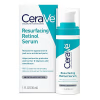
 Best overall retinol cream$28.47$34.99


What are the benefits of retinol?
There are many short- and long-term benefits of retinol when applied to the skin. "Retinol works to increase cell turnover, in turn helping to refine the skin and signs of aging that are often caused by environmental factors," Dr. Kim Nichols, a board-certified dermatologist and founder of NicholsMD, previously told Shop TODAY.
“When used properly and consistently, retinol can reduce redness, inflammation and pore size, while simultaneously reducing the appearance of blemishes, hyperpigmentation and stubborn dark spots associated with problematic skin,” explained Nichols.
Retinol cream vs. retinol serum
If you're struggling to decide whether to reach for a retinol cream or a serum, it is imperative to first consider your skin type. If you suffer from dry or sensitive skin, it is best to start with a retinol cream over a serum.
“For those with dry or sensitive skin, it can help to use a retinol cream that also contains ingredients like hyaluronic acid, ceramides and niacinamide which can help to reduce dryness, minimize irritation and improve overall tolerability,” board-certified dermatologist, Dr. Marisa K. Garshick once told Shop TODAY.
"Creams tend to be more hydrating and nourishing on the skin as compared to serums, making them especially good for beginners or those with sensitive skin," explained Garshick. "Serums are lightweight and tend to absorb easily so may be good for those with oily skin."
Garshick also previously suggested starting with low percentage of retinol. “When looking for a retinol cream, it is important to consider the concentration as those with sensitive skin or those new to retinol should opt for a lower concentration,” she said.
On the other hand, if you suffer from more serious hyperpigmentation or deep wrinkles, a serum may be best to combat those conditions. Serums are also known to contain higher concentrations of the ingredient, so it is best to take things slow at to see how your skin responds.
“The trick is that less is more," said board-certified dermatologic surgeon Dr. Mary L. Stevenson, MD while speaking with Shop TODAY. "Using them to the point of redness, flakiness or irritation does not give you more benefit. You have to find the sweet spot for your own skin. Some can use more than others, so find the right balance for your skin type and work with a board-certified dermatologist."
Best retinol creams, according to experts
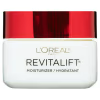
Great for all skin types: L'Oreal Paris Revitalift Moisturizer

- This scent is subtle
- Not too heavy
- Feels very moisturizing
- Some had skin reactions
Size: 1.7 oz. | % of retinol: Not listed (pro-retinol) | Other key ingredients: Centella asiatica | Can be used for: Face and neck
Board-certified dermatologist and clinical professor of dermatology at Tulane University School of Medicine Dr. Mary P. Lupo, MD, told Shop TODAY she recommends L'Oreal when it comes to choosing a trusted brand for retinol cream. Designed for all skin types, the brand says this face and neck moisturizer is known to help fight wrinkles and improve skin firmness.
Infused with pro-retinol and centella asiatica, this moisturizing cream is great for sensitive skin and has over 4,300 verified five-star ratings on Amazon.
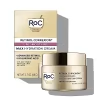
Hello hydration: RoC Retinol Correxion Max Daily Hydration Face Cream

- Feels gentle on skin
- Doesn't feel greasy
- Many see results in weeks
- No protective seal, per buyers
Size: 1.7 oz. | % of retinol: Not listed (0.1-1) | Other key ingredients: Hyaluronic acid | Can be used for: Face
Lupo and Dr. Angela J. Lamb, MD, a New York City-based board-certified dermatologist, both told Shop TODAY they recommend this retinol cream from RoC containing hyaluronic acid, which the brand says helps hydrate the skin for up to 48 hours. Many satisfied customers on Amazon say this skin care product is very lightweight, super silky and not greasy upon application.
"I love this product. It is the only face product I have ever finished before it would expire AND repurchased. I love slathering it all over my face and chest after a shower before bed. It makes my skin feel good and keeps it looking young. The girl who does my brows comments on my skin every time I am in her chair," raved one five-star reviewer on Amazon.
No more fine lines: Neutrogena Rapid Wrinkle Repair Retinol Regenerating Cream

- Feels cooling
- Mild scent
- Some experienced redness
Size: 1.7 oz. | % of retinol: Not listed | Other key ingredients: Hyaluronic acid | Can be used for: Face and neck
If you're still struggling to find the perfect retinol cream, Lupo also told Shop TODAY she recommends this regenerating cream from Neutrogena. Formulated with retinol and hyaluronic acid, this anti-aging face cream is designed to combat fine lines, wrinkles and dark spots. The brand says to apply it twice daily to both the face and neck, but Lupo suggested applying every other evening (up to four times per week).

Five-star worthy: Olay Regenerist Retinol 24 Night Moisturizer

- Smooth and not greasy
- Doesn't feel sticky
- Very hydrating
- Can take time to see results
Size: 1.7 oz. | % of retinol: Not listed (about 0.3) | Other key ingredients: Vitamin B3, peptides | Can be used for: Face and neck
In need of a night retinol cream? Lupo also told us she recommends this Olay moisturizer which has over 3,500 verified five-star ratings on Amazon. Formulated with vitamin B3 and retinol, this fragrance-free cream is designed to hydrate the skin for up to 24 hours, according to the brand.
"I absolutely loved how the okay Regenerist Retinol 24 + Peptide Night Face Moisturizer made my face look and feel. I could definitely see improvement in how my skin looked, and my face feels so much softer now that I use this product nightly," wrote one reviewer on Olay's website.
Goodbye blemishes: SkinCeuticals Retinol 1.0 Maximum Strength Refining Night Cream

- Adds brightness to skin
- Don't need to apply every day
- Many dislike packaging
Size: 1.0 oz. | % of retinol: 1.0 | Other key ingredients: Bisabolol | Can be used for: Face
Lamb also recommended this night cream from SkinCeuticals that is formulated with a high concentration of retinol to help minimize blemishes and improve the appearance of wrinkles. The brand recommends applying this fragrance-free cream in the evening, with 4-5 drops to help clean dry skin.
Best retinol serums, according to experts
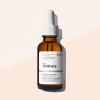
Affordable and effective: The Ordinary Retinol Serum with Squalane

- Helps skin look "soft and bright"
- Reviewers recommend mixing it with your moisturizer for less potency
- Those with sensitive skin experienced burning sensations, irritability
Size: 1.0 oz. | % of retinol: 1 | Other key ingredients: Squalane
Former pharmacy executive and skin care expert Dr. Liia Ramachandra loves this affordable option and says it is effective. This retinol serum contains squalane to help hydrate the skin and is designed for all skin types.
It's a winner: Cerave Resurfacing Retinol Serum

- Great quality
- Many noticed results instantly
- May cause dryness
Size: 1.0 oz. | Other key ingredients: Hyaluronic acid, ceramides, niacinamide, licorice root extract
A 2023 Shop TODAY Beauty Award Winner for best budget anti-aging serum, this resurfacing retinol is designed to help minimize pores and reduce the appearance of acne.
Dr. Debra Jaliman, a board-certified dermatologist and author of the book, “Skin Rules: Trade Secrets from a Top New York Dermatologist," explained that this serum "contains hyaluronic acid, glycerin and ceramides, which hydrate the skin, and niacinamide and licorice root extract, which help with uneven dark discoloration."
Great for dark circles: RoC Retinol Correxion Deep Wrinkle Facial Filler

- "Quality product," according to reviewers
- Lightweight texture
- Some reviewers didn't notice a difference after use
- Some reviewers had packaging and delivery issues
Size: 1.0 oz. | Other key ingredients: Hyaluronic acid
Lamb is also a big fan of this deep wrinkle facial filler from RoC. Designed to target and reduce wrinkles, this retinol serum contains hyaluronic acid and has 8,000+ verified five-star ratings on Amazon. One satisfied shopper said, "this is the only product that I use for my dark circles and fine lines. I’m on my second tube and I plan on repurchasing again once I run out. Worth the money!"

Handles crows feet: La Roche-Posay Redermic Anti-Aging Retinol Serum

- Quick results
- Fragranced
Size: 1.0 oz. | Other key ingredients: Lipo-hydroxy acid, thermal spring water
Dr. Leah Jacob, MD, board-certified dermatologist and associate professor of dermatology at Tulane University’s School of Medicine in New Orleans, recommended this anti-aging serum that the brand says visibly reduces crow's feet, wrinkles and sun damage.
“Begin application once every two to three days, and increase to daily application as tolerated. If excessive irritation occurs, mixing the serum with your favorite moisturizer can help to improve tolerability,” suggested Jacob.
Frequently asked questions
If you're wondering if retinol is working, you can tell if your skin appears softer or smoother. “Three to six months is the standard timeline where consumers can expect to notice changes in the skin,” Nichols said. “It's essential to stick to the product before giving up for the skin to get used to the retinol.”
When it comes to the percentage of retinol to use, there is no right answer, according to Dr. Morgan Rabach, MD, a board-certified dermatologist and co-founder of LM Medical NYC. "I like to start my patients on the lowest strength, usually 0.025% and then move them up 0.05% and then 0.1% as tolerated," she said.
Rabach explained that even at the lowest strengths, she recommends her patients start using retinol a few times a week, and use moisturizer with the retinol because retinols cause dryness.
“After around a month of use, the skin gets more acclimated to the retinol, and then you can use it more frequently,” she said. “If a patient is using it every day with no dryness and the skin is still oily, you can move to the next higher-strength retinol.”
Retinol creams aren't a spot treatment, so feel free to use them as long as needed. However, if you do decide to stop using, Lupo said you can reap the benefits for years if you keep your skin properly protected from UV and environmental damage, which can destroy the healthy collagen that the retinol cream helped produce.
How we chose
The Shop TODAY team rounded up the best retinol creams and serums by enlisting the recommendations of board-certified dermatologists to prioritize the formula best suited for our audience based on their specific skin care concerns.
Meet the experts
- Dr. Kim Nichols, MD, FAAD, is a board-certified dermatologist and cosmetic surgeon. She is the founder of NicholsMD of Greenwich.
- Dr. Marisa K. Garshick, MD, FAAD, is a board-certified dermatologist currently working in New York and New Jersey. She also works at Cornell as an assistant clinical professor of dermatology.
- Dr. Mary L. Stevenson, MD, is a board-certified dermatologic surgeon and associate professor of dermatology at NYU Langone Health.
- Dr. Mary P. Lupo, MD, is a board-certified dermatologist and clinical professor of dermatology at Tulane University School of Medicine.
- Dr. Angela J. Lamb, MD, is a board-certified dermatologist based in New York City. She’s currently the Vice Chair of Clinical Operations at Mount Sinai Dermatology.
- Dr. Debra Jaliman, MD, is a board-certified dermatologist and author of the book, “Skin Rules: Trade Secrets from a Top New York Dermatologist.”
- Dr. Leah Jacob, MD, is a board-certified dermatologist and associate professor of dermatology at Tulane University’s School of Medicine in New Orleans.
- Dr. Morgan Rabach, MD, is a board-certified dermatologist and co-founder of LM Medical NYC.
- Dr. Liia Ramachandra, Pharm.D., Ph.D, is a former pharma executive and skin care expert based in Canoga Park, California. She is the CEO and founder of skin care brand Epilynx.
Paid for by Sam's Club


Paid for by Sam's Club
