

When it comes to skin care ingredients that fight the signs of aging and reveal youthful radiance, there’s one that’s truly worth its weight in gold. Or, in this case, worth its weight in finding the fountain of youth. We’re talking, of course, about vitamin A, which in turn leads to retinol and retinal.
“Retinol and retinal are both forms of vitamin A known as retinoid — a class of ingredients that help promote cellular turnover and exfoliation, stimulate collagen production and regulate oil production,” says Dr. Geeta Yadav, a board-certified dermatologist and the founder of FACET Dermatology in Toronto, Canada. “However, they differ in strength and efficacy due to a conversion process that takes place in your skin once they’re applied.”
Truthfully, the results you’ll see from both retinol and retinal are pretty similar, but they’re not identical. So I asked dermatologists to help settle the debate. Read on for their expert advice and find out which products deserve a place in your anti-aging skin care routine.
 Budget-friendly retinol$24.97$37.39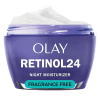


Retinol vs. retinal: what’s the difference?
Retinol and retinal actually are both derivatives of vitamin A, which helps promote cell turnover, stimulate collagen production and reduce the appearance of fine lines and wrinkles. The difference really lies in their conversion process to retinoic acid.
“Retinoic acid, or tretinoin, is the retinoid form that can be used by the skin, making it the most potent — but it’s only available by prescription,” says Dr. Hadley King, MD, FAAD, a board-certified dermatologist in New York City. In addition to retinyl palmitate, retinol and retinaldehyde (aka retinal) are the other retinoids. “These have to undergo a conversion process in order to turn into retinoic acid before the skin can use them,” King says. “The process correlates with potency and efficacy.”
Basically, the more steps it takes for these ingredients to be converted into retinoic acid, the weaker the retinoid will be. Retinol goes through two steps, while retinal only goes through one, so retinal is stronger than retinol.
Which is better?
When it comes to deciding between retinal and retinol, it really depends on what your skin can handle. “Essentially, both result in mild, anti-aging effects as well as improvement in acne and photoaging,” explains Dr. Sandy Skotnicki, MD, FRCPC, a dermatologist and assistant professor at the University of Toronto. “Retinal is more potent and can result in more improvement over time.”
According to double board-certified dermatologist Dr. Elizabeth Bahar Houshmand, MD, retinal can also work wonders for people who are more prone to breakouts. “Retinal is also excellent for acne and not just for fine lines and wrinkles,” she says.
It’s worth noting, though, that both retinol and retinal can cause irritation, especially for those with sensitive skin or suffering from skin conditions like eczema and rosacea. “If you’re new to retinol or have sensitive skin, I would advise against retinal and opt for gentler variations,” says Dr. Melanie Palm, MD, MBA, a board-certified dermatologist and cosmetic surgeon at Art of Skin MD in San Diego, California.
When should you start using retinal?
Since retinal is a more supercharged version of a retinoid, you probably don’t need to start using it too early. “Retinal is generally recommended for individuals with mature skin who are looking to supercharge their anti-aging routine and improve skin tone, texture, fine lines and wrinkles,” Palm says.
Conversely, you can start using retinol much earlier, even as early as your 20s. “It can be beneficial to start with a retinol first and work up to retinal, as the skin can build tolerance to the irritating effects of both ingredients,” advises Skotnicki.
Best retinol products, according to dermatologists


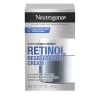
“This is a good go-to for those starting retinol,” Skotnicki says of this moisturizer. She likes that, in addition to retinol, it contains hyaluronic acid, which she notes helps “reduce irritation.” According to the brand, it’s safe enough to use in your skin care routine twice a day.

Skotnicki recommends this retinol night cream because it’s fragrance-free, making it ideal for those with more sensitive skin. “It also has niacinamide to help with pigmentation and reduce irritation,” she says. The gel-cream formula makes it ideal for warmer months since it’s not as heavy as traditional moisturizers.

Houshmand likes this retinol serum because of its 0.3% retinol concentration. “At this percentage, it is a tolerable and effective serum,” she says. “It contains excellent moisturizing ingredients like glycerin and glycol, but it also dries quickly to a smooth, elegant finish.”
It works to smooth and refine skin texture, reduce wrinkles and leave skin looking bright and luminous. In addition to retinol, it contains hydrating hyaluronic acid and nourishing vitamin E.

Not only is this night cream formulated with encapsulated retinol, but it also comes in three different strengths, making it a favorite of King’s. “I love that Fig.1 offers three levels of retinol to accommodate different skin types, experience and sensitivity,” she says. “The base contains humectants to hydrate the skin and emollients to support the skin barrier, as well as anti-aging peptides.”
The brand recommends starting with level one, which has a very tolerable level of retinol at just 0.15%. You can then level up (pun intended) after four to six weeks of nightly use without any skin sensitivity.

Yadav recommends this retinol treatment for its mix of ingredients. “In addition to containing a potent 1% retinol, it features peptides and vitamin C,” she says. “All of these ingredients help promote collagen production and healthier skin function for firmer, smoother-looking skin with less noticeable texture and discoloration.”

This serum combines retinol with the antioxidant malassezin to reduce wrinkles and support the skin barrier. “Malassezin helps protect the skin from damage from free radicals, while also supporting and calming the skin barrier to reduce the risk of irritation from retinol,” King says.


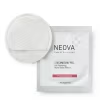
“These peel pads have unique ingredients that give the skin a beautiful glow and improve the skin quality,” says Houshmand. “They’re perfect for those wanting to use a cosmetically elegant combination formulation.”
Each pre-dosed pad contains hydroxypinacolone retinoate, a retinoic acid that penetrates the skin’s deep layers to reduce the appearance of fine lines and wrinkles and improve skin elasticity. They also have beta hydroxy acid (BHA) and a natural AHA five-acid blend that work to exfoliate and dissolve debris. Oh, and did we mention that you can swipe one over your face in only five seconds? Score.

“This retinol cream is formulated with ceramides, squalane and niacinamide to hydrate, moisturize and calm dry or irritated skin,” Palm says. This formula certainly packs a punch because it also has a unique combination of a retinoid and lactic acid, glycolic acid and a targeted peptide blend.
Best retinal products, according to dermatologists

“The formulation is well-balanced with nourishing ingredients like niacinamide, bisabolol, hyaluronic acid and squalane to support the skin barrier and minimize irritation,” says King of this retinal serum. It’s even garnered a near perfect five-star average rating on both Amazon and the brand’s site.

“This serum collection is very clever — the formula is available in six different strengths, allowing you to work your way from the gentlest to the most potent as your skin tolerates retinal,” says Yadav.
She likes the formula’s inclusion of hyaluronic acid, glycerin and vitamin E, which help nourish, hydrate and support the skin barrier. The different retinal strengths also make it one of Palm’s favorite retinal products.

Just because you have more reactive skin doesn’t mean you have to shy away from using retinal. This retinal cream for sensitive skin was recommended by almost every dermatologist we spoke with.
Houshmand likes it for its lower concentration of retinal: “It’s one of my favorite products for those who want to try a retinal and have the benefits without the dryness and peeling of stronger formulations,” she says.
King counts it as a favorite, too, and says it’s “formulated to provide anti-aging benefits for all skin types, even more sensitive ones,” while Skotnicki regards it as “widely accessible and affordable.”

Since the skin around your eyes is incredibly thin and delicate, it can certainly benefit from a retinol eye cream. Houshmand loves this one by Murad because of its unique encapsulated retinal. “The targeted delivery system tightens the skin around the eye area with minimal irritation,” she says. In addition to retinal, the eye cream has gentian root extract (to improve the appearance of drooping and sagging lids, folds and under-eye bags) and oat-firming film (to lift skin immediately and over time).
Frequently asked questions
While both retinol and retinal can be pricey, you may see a higher cost attributed to the latter. “Retinal delivers faster results than retinol, which is why you may see a price difference,” Houshmand explains.
In a word? Yes. Using retinal can result in irritation, dryness, redness, flaking or breakouts. The good news, though, is that this should hopefully stop with consistent use. “These symptoms generally subside by the fourth week,” says King.
And if you’re pregnant or breastfeeding? Skotnicki says using any type of retinoid is a big no-no.
Additionally, retinal makes skin much more sensitive to UV rays. “Any vitamin A derivative will create photosensitivity in the skin, so it’s important to practice sun safety habits like using a broad-spectrum sunscreen of SPF 30 or higher to avoid sunburn and sun damage,” says Palm.
Use retinol and retinal at night.
It’s best to use these products as part of your evening skin care routine, so they can work while you sleep. “Use these in the evening, after cleansing the face, and follow up with a hydrating moisturizer,” recommends Houshmand.
Use a pea-sized amount of product.
Yes, that’s all you need! Every dermatologist we spoke with recommended this amount of retinol or retinal for your entire face and neck.
Try the sandwich technique.
King is a fan of this technique, which basically means you’re “sandwiching” the retinoid within other products. “Apply moisturizer, then the retinol, then more moisturizer,” she advises.
Start slow.
“I always tell my patients to use them low and slow,” Houshmand says. “Use a lower concentration initially a few times a week and build up to nightly.” This can help minimize irritation and breakouts that can occur if you apply it too frequently or use too much.
Wear sunscreen every day.
We know we shouldn’t have to tell you this, but it's especially important to wear sunscreen every single day when you incorporate retinal or retinol into your skin care routine. “Accelerated cellular renewal can leave the skin more sensitive to sun exposure,” Yadav says. “It is especially critical to wear sunscreen daily when using a retinoid.”
Be careful of ingredient pairings.
Because retinoids can increase skin sensitivity, it’s also important to think about the other ingredients in your skin care routine. “Do not apply retinoids in the same routine as other skin-sensitizing ingredients like AHAs, BHAs or benzoyl peroxide,” says Yadav, who recommends using ingredients like that on nights that you don’t use retinol or retinal. Skotnicki also advises staying away from glycolic acid.
Include nourishing ingredients in your skincare routine.
“For patients with sensitive skin, I like using retinol in conjunction with bakuchiol, a plant-derived ingredient with powerful antioxidant properties,” Palm says. “When used together, bakuchiol can increase the tolerance of retinol and effectively reduce redness, dryness and irritation.” You can also look for ingredients like hyaluronic acid, niacinamide and peptides.
How we chose
The Shop TODAY editors and writers search the internet to find the best products out there. We interview expert sources and use our own personal experiences with the product and brand to make shopping easier for our readers.
Meet the experts
- Dr. Elizabeth Bahar Houshmarnd, MD, is a double board-certified dermatologist and the founder of Houshmand Dermatology and Wellness in Dallas, Texas. She specializes in cutaneous laser surgery and the dermatologic care of patients with a special interest in cosmetic dermatology, laser medicine, acne, hair loss and melasma.
- Dr. Hadley King, MD, FAAD, is a board-certified dermatologist in New York City. She specializes in medical and cosmetic dermatology, and is also a clinical instructor of dermatology at the Weill Medical College of Cornell University.
- Dr. Melanie Palm, MD, MBA, is a board-certified dermatologist and cosmetic surgeon at Art of Skin MD in San Diego, California. She is also an associate volunteer clinical professor at University of California, San Diego.
- Dr. Sandy Skotnicki, MD, FRCPC, is a dermatologist and assistant professor at University of Toronto. She is also the author of "Beyond Soap" and the co-host of the Skin To It podcast.
- Dr. Geeta Yadav is a board-certified dermatologist and the founder of FACET Dermatology in Toronto, Canada. She trained at University of Toronto, Johns Hopkins University and the Northern Ontario School of Medicine. She is an expert in both medical and cosmetic dermatology.


