

While everyone knows it’s important to exfoliate, it can be difficult to know exactly how often this step should be integrated into your routine and which ingredients should be included or avoided based on skin type and concern. In general, there are three classes of acids that are used as exfoliants in skincare: AHAs, BHAs and PHAs.
“AHA, BHA and PHA are different types of chemical peeling agents used in skin care,” says Dr. Macrene Alexiades, a double board-certified dermatologist. “Each type of acid has distinct properties and benefits for the skin.”
Shop TODAY asked Alexiades and other dermatologists to explain the difference between the acids, who should use (and avoid) them and for their favorite products that contain each exfoliant. Plus, editors shared the products with AHAs, BHAs and PHAs that have earned a place in their skin care routines.
 Budget-friendly$19.24$35.99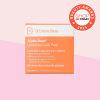
 For minimizing pores$undefined$32.00


AHAs: Alpha hydroxy acids
AHAs are typically used in serums and moisturizers to combat dry skin and signs of aging, explains board-certified dermatologist Dr. Dendy Engelman. They are water-soluble and suitable for daily use on all skin types.
AHAs work by “peeling off the dead skin layer, breaking the bonds between skin cells and reducing the ‘stickiness’ of skin cells so they can slough off,” explains Alexiades. She adds that they have a brightening effect on excess pigmentation, which promotes the skin’s luminosity and radiance.
If you’re looking for products containing AHAs, Alexiades suggests searching for glycolic, citric, malic, lactic and tartaric acids in ingredient lists.
Who should avoid AHAs?
Board-certified dermatologist Dr. Corey L. Hartman says those with eczema, psoriasis, a history of melasma or those with darker skin should be cautious and consult a board-certified dermatologist before using skin care products with AHAs. “It’s not to say that anyone with eczema can never use AHAs, but a conversation with board-certified dermatologist should be had first to determine the appropriate active percentage to ensure you don’t trigger a flare-up for the skin condition.”
He adds that using an AHA product that’s too harsh for your skin “may trigger an immune response in the body that ramps up melanin production, leading to melasma and general hyperpigmentation.”
If you’re nursing an open wound or active sunburn, he recommends taking a break from AHAs to avoid causing further irritation.
Best AHA products, according to dermatologists and editors
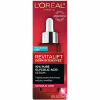
L’Oreal Paris Revitalift 10% Pure Glycolic Acid Face Serum

- Gentle on skin
- Effective
- Some say it's sticky
- Must follow with SPF in AM
Key ingredients: Glycolic acid, aloe extract
Alexiades recommends this serum packed with 10% pure glycolic acid and soothing aloe that makes it gentle enough for daily use. Reviewers love it, too, with several saying they noticed a difference in fine lines, wrinkles and dark spots after using it. If you’re using it in the morning, be sure to follow up with SPF as the brand says glycolic acid may increase sun sensitivity.
Dr. Dennis Gross Alpha Beta Universal Daily Peel

- Prevents dead skin buildup
- Good for anti-aging, too
- Two-step system
Key ingredients: Glycolic acid, salicylic acid, lactic acid, malic acid, mandelic acid, willowbark extract
These peel pads are a 2024 Shop TODAY Beauty Awards winner and a favorite of multiple editors. "As a former beauty writer, I feel like I have tried everything on the market (and I just might’ve) but very few products have stuck with me through the years," says commerce editor Vivien Moon.
"This product is what I turn to when my skin is in need of rescuing or feels like it has been through it (especially after travel). They are tiny but mighty and offer me a glow within one use, which is harder to maintain now that I am in my 30s and more cautious about what I put on my skin and how I take care of it."
Sunday Riley Good Genes All-in-One Lactic Acid Treatment

- High-potency AHA
- Noticeable results
- Has a strong fragrance
Key ingredients: Lactic acid, licorice root extract, squalane, aloe leaf extract
This lactic acid treatment is another previous Beauty Awards winner and a favorite of several editors. Associate editor Shannon Garlin says that after using it once a week, she noticed "brighter skin and fading dark marks that have seemed impossible to get rid of. It's really moisturizing so you can just use it as your final step but since I have dry skin, I use it right before I moisturize!"

SkinMedica AHA/BHA Exfoliating Cleanser

- Suitable for sensitive skin
- Good for all skin types
- Only need a small amount
Key ingredients: Lactic acid, glycolic acid, citric acid, malic acid, salicylic acid, jojoba oil, licorice root extract
Engelman likes this cleanser that contains several AHAs and a BHA. The AHAs are derived from bilberry, sugar cane, sugar maple and citrus extracts, which helps to make them gentle on the skin. According to the brand, the physical exfoliants in it are round, soft spheres made of jojoba oil, which are both gentle and moisture-packed.
SkinBetter Science EyeMax AlphaRet Overnight Cream

- Skin firming
- Brightening and hydrating
- May take time to see results
Key ingredients: Retinol, glycerin, niacinamide, citric acid
Hartman says this eye cream from Skinbetter Science is one of his favorites. "It uses retinol, but won’t cause irritation," he notes. "I like SkinBetter’s AlphaRet technology that combines retinol with AHAs. The combination helps reduce the appearance of fine lines, wrinkles, texture and helps even skin tone."
BHAs: Beta hydroxy acids
According to the FDA, the most common form of BHA in cosmetics is salicylic acid. They are most commonly found in products that tout their ability to fight off oil, making them most ideal for oily skin types, says Engelman: “BHAs are best for acne-related issues such as large pores, blackheads and pimples.”
Alexiades further explains that BHAs work by “reducing the ‘stickiness’ of skin cells in the follicular infundibulum — the scientific term for pore — allowing pores to drain more easily, and reducing comedones, which are whiteheads and blackheads.”
BHAs also work to kill or reduce the bacteria living in the skin’s follicles and pores, which will keep breakouts at bay and help improve the overall texture of the skin, the experts say.
Who should avoid BHAs?
While they’re generally safe to use every day or every other day as your skin adjusts to the products, Engelman notes that “it is generally advised to not use BHA products during pregnancy.”
People with very dry skin should also avoid products with BHAs or that tout oil-removing capabilities as they can strip the skin and lead to irritation, the experts advise. If you have sensitive skin, you can use a cleanser with BHAs in it, but you should pair it with a gentle moisturizer to replenish the skin which can include both AHAs and PHAs.
Best BHA products, according to dermatologists and editors
PanOxyl Clarifying Exfoliant with 2% Salicylic Acid

- Some like it for mature skin
- Smooths textured skin
- Some say it can be harsh
Key ingredients: Salicylic acid, glycerin
A face wash is an easy way to integrate BHAs into your skin care routine. Alexiades like this one from PanOxyl that contains salicylic acid, blue algae and antioxidants that help nourish and calm the skin to reduce redness and irritation.
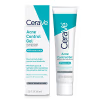
CeraVe Acne Control Gel

- Good for mild acne
- Helped some heal acne scars
- May not be for cystic acne
Key ingredients: Salicylic acid, glycerin, glycolic acid, lactic acid, niacinamide, ceramides
Packed with AHAs, BHAs and other hydrating ingredients, Alexiades like this acne treatment gel that works to maintain the skin's moisture barrier. It's formulated to clear existing acne, prevent new breakouts, minimize pores and some reviewers even said it helped heal acne scarring.
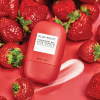
Glow Recipe Strawberry BHA Pore-Smooth Blur Drops

- Smoothing results
- Oil control
- May have an unpleasant scent
Key ingredients: Salicylic acid, strawberry leaf extract, hyaluronic acid, citric acid, castor oil
Senior editor Jess Bender likes to use these drops from Glow Recipe to help minimize the look of her pores. "As somebody with sebaceous filaments that make me feel insecure, these 'blur' drops from Glow Recipe do a great job masking them when they’re at their largest," she says. "While I can’t speak on how they’ve refined my filaments in a long-term capacity, the immediate effects are pretty apparent with the satiny way it makes my skin feel to the smoother look it gives my makeup finish to the decrease of oil that lingers around my T-zone."

Paula's Choice Skin Perfecting 2% BHA Liquid Exfoliant

- Unscented
- Gentle on skin
- Some say it feels sticky
Key ingredients: Salicylic acid, green tea
This liquid exfoliant is another favorite of several editors on the team. "I've been using this for over a year (in conjunction with the brand's vitamin C) and always get the most compliments the next day about how bright and clear my skin looks," says associate editor Kamari Stewart. "It's super gentle, which is great, and I'm always surprised by how much more stuff comes up on the cotton pad after using this even though I use it after I wash my face."

Personal Day Doing the Work Salicylic Acid Treatment

- Works quickly
- Brightens skin
- May need to start slowly
Key ingredients: Salicylic acid, azelaic acid, niacinamide, zinc hyaluronate
Commerce writer Danielle Murphy likes this formula for her acne-prone skin. "Whenever I feel a breakout coming on, or need to fight one, I put a few drops of this treatment on a cotton pad and gently swipe it across the affected area, usually at night. When I wake up, my skin just looks less angry and red. It definitely looks more soothed."

Trinny London BHA Exfoliant

- Leaves skin glowing
- Complexion clearing
- Can be irritating
Key ingredients: Salicylic acid, mandelic acid, willowbark, glycerin, cinnamon bark extract, lactic acid
Commerce writer Jannely Espinal has been using this exfoliant for months and says her skin looks clearer and feels more glowy because of it. While she notes that it may be a little irritating for those with sensitive skin, she says the results are amazing: "My skin feels more radiant and clear since using it!"
PHAs: Polyhydroxy acids
"Similar to AHAs, PHAs are chemical exfoliants that can help improve skin’s texture and even skin tone," explains Hartman. "PHAs work by exfoliating the top layer of dead cells on the skin, revealing newer, healthier skin underneath."
Alexiades says PHAs are great for people with sensitive skin. They can be used daily in the form of moisturizers or serums for dry, combination and oily skin types. Their gentle-yet-effective nature makes them perfect to use in leave-on products like lotions or serums.
“They are gentler than AHA or BHAs because they are larger molecular structures that penetrate the skin more slowly,” she explains.
If you’re looking for products with PHAs, Alexiades recommends searching for gluconolactone or lactobionic acid on ingredient lists.
Who should avoid PHAs?
While Hartman says PHAs are "generally well-tolerated by most patients," he recommends avoiding them if you have a sunburn or an active wound — at least until the skin heals.
Even if you have sensitive skin, he adds that you may want to start with skin care products that have a lower active percentage of PHAs to ensure you won't have an adverse reaction.
Best PHA products, according to dermatologists
Cetaphil Healthy Radiance Gentle PHA Exfoliating Cleanser

- Gentle on skin
- Helps with discoloration
- May not lather
- Thin consistency
Key ingredients: Gluconolactone, glycerin, niacinamide, peppermint leaf extract
For more sensitive skin, Alexiades recommends this cleanser that’s packed with exfoliating PHAs. It also contains niacinamide and antioxidants, both of which work to moisturize and nourish the skin while improving its overall texture.
Aveeno Calm + Restore Nourishing PHA Facial Exfoliator

- Hypoallergenic
- Gentle on skin
- May have a slight smell
Key ingredients: Sunflower seed oil, glycerin, gluconolactone, oat kernel oil, castor oil
For another gentle-yet-effective cleanser, Alexiades recommends this option from Aveeno. It promises to be non-abrasive and contains oat oil to help calm any redness that may result from breakouts or irritation.
Medik8 Press & Glow Daily Exfoliating PHA Tonic

- Gentle on skin
- Not drying
- Subtle scent
Key ingredients: Gluconolactone, glycerin, aloe vera leaf juice
Another way to incorporate PHAs is through a toner, which should be applied to the face after cleansing. Engelman is a fan of this option — she's even recommended it on the show before — which she says is gentle enough for daily use. It works to even out texture and prep your skin to get the best results from any serums or moisturizers that are applied afterward.
Frequently asked questions
Board-certified dermatologist Dr. Asmi Berry says the frequency "depends on your skin type, tolerance and the specific type of acid you're using. AHAs and BHAs can be used a few times a week for most people, but if you’re new to exfoliation or have sensitive skin, start with once or twice a week and build from there. PHAs are the gentlest on the skin and can often be used daily."
Dr. Michele Farber, board-certified dermatologist at Schweiger Dermatology Group, echoes similar sentiments, adding that people with "oilier skin may be able to use [exfoliant acids] more often and gentler ingredients like PHAs may also be tolerated more often but this will vary individually."
No matter what your skin type is, Berry says the most important thing is to do is listen to your skin. "If you notice irritation or dryness, scale back. A lot of my patients come in to see me and think they’re under-exfoliating when, in reality, they’re doing too much. Less can be more."
In short: yes. Farber and Berry agree that AHAs are helpful for surface-level acne issues like excess oil and skin cells, clogged pores and post-breakout marks.
However, if you have deep, inflamed or cystic acne, Berry recommends reaching for a BHA. "They go deep into the pores to clear the oil buildup. The best results come from a strategic mix of both — customized to your skin type."
You can technically mix products with all three exfoliating acids, but the experts recommend doing so strategically.
"If you mix too many acids at once, you risk irritation, redness or even compromising your skin barrier," notes Berry. "Since BHAs work inside pores and AHAs work on the surface, they can be paired, but for beginners, alternating them on different days can often work better. PHAs are the most forgiving, so they can often be layered with either one."
Farber and Berry agree that, if you really want to mix acids, your best bet is alternating the days you apply them.
Farber and Berry say the potential side effects of AHAs, BHAs and PHAs are dryness, redness, irritation, peeling, sun sensitivity or allergic reactions.
"The key is balance. Too much exfoliation weakens the skin barrier, leading to irritation," advises Berry.
Berry calls out AHAs specifically as the "most likely to cause sun sensitivity."
Both she and Farber emphasize the importance of using SPF daily, but especially when using acids in your skin care routine.
"I tell my patients: exfoliation and then not wearing SPF is like taking one step forward and two steps back," says Berry.
Berry describes niacinamide and BHAs as a "powerhouse duo."
"Salicylic acid clears out pores and reduces oil, while niacinamide strengthens the skin barrier, reduces redness and balances hydration. This combo is perfect for acne-prone or oily skin because it tackles breakouts without stripping your skin dry," she explains.
While they can be used in the same skin care routine, Farber recommends using them on different days because "they can raise the skins pH and change the efficacy of the products."
"Exfoliation is one of the most powerful anti-aging tools because it speeds up cell turnover — the process that naturally slows as we age," explains Berry.
She and Farber call out exfoliating acids' impact on helping with fine lines, large pores, sun damage, stimulating collagen production and improving texture.
"The right acid at the right frequency can keep your skin looking refreshed, smooth and radiant — without overdoing it," says Berry.
Farber and Berry agree that low concentrations of certain exfoliants can be safe, but you should always start by consulting your dermatologist.
AHAs and PHAs work on the surface of the skin and BHAs penetrate deeper, according to Berry and Farber.
Berry provides the following guide for when to start using exfoliating acids:
- AHAs: In your early 20s for anti-aging to maintain collagen production
- BHAs: In your teens for acne
- PHAs: Any beginner level
"No matter when you start, the goal shouldn’t be to follow trends — it should be to use the right science, in the right way, for your unique skin type," she says.
How we chose
Shop TODAY consulted expert dermatologists on everything you need to know about AHAs, PHAs and BHAs and they shared their favorite skin care products that contain them. Editors also shared the products that contain AHAs, PHAs and BHAs that have earned a spot in their skin care routines.
Meet the experts
- Dr. Macrene Alexiades, MD, PhD, is a dual board-certified dermatologist and runs the Dermatology and Laser Surgery Center of New York.
- Dr. Dendy Engelman, MD, FACMAS, FAAD, is a board-certified dermatologist and is the director of dermatologic surgery and laser medicine at Shafer Clinic Fifth Avenue in New York City.
- Dr. Corey L. Hartman, MD, FAAD, is a board-certified dermatologist, and founder and medical director of Skin Wellness Dermatology in Birmingham, Alabama.
- Dr. Asmi Berry, DO, FAAD, is a board-certified dermatologist at BHSkin Dermatology in Los Angeles, California.
- Dr. Michele Farber, MD, FAAD, is a board-certified dermatologist at Schweiger Dermatology Group in Philadelphia, Pennsylvania.


