


Much like acne, rosacea can be triggered by a wide variety of things, from stress to spicy foods to red wine. This common condition can result in symptoms like redness, flushing, pustules and dilated blood vessels that can oftentimes be totally unpredictable. While there may not be a cure for rosacea, you can avoid common triggers and keep flare-ups at bay with the right skin care routine and products.
A 2021 study published in The Journal of Clinical and Aesthetic Dermatology showed that one's diet can play a big role: Alcohol, fatty foods, spicy foods, cinnamaldehyde-containing foods, and histamine-rich foods could trigger or worsen rosacea. (Of course, while it's easy to assume that any form of redness in the face is rosacea, make sure to consult a medical professional for their diagnosis.) But aside from avoiding common foods and drinks that trigger rosacea, are there skin care ingredients you should also be avoiding?
Whether you're looking for a gentle face wash for rosacea or advice on building a functional skin care regimen that keeps irritation at a minimum, we did the research and rounded up expert skin care tips and solutions here. Use the links below to jump to a specific category.
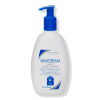 Most budget-friendly cleanser$12.99$12.99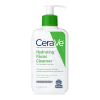
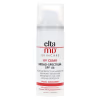 Best splurge option$undefined$45.00


Best face washes and cleansers for rosacea, according to experts

"This cleanser has glycerin, which is super hydrating and great for patients with eczema, rosacea and psoriasis," New York City-based dermatologist Dr. Bruce Robinson previously said about this gentle Neutrogena face wash for sensitive skin.

“People with rosacea tend to have more sensitive skin, so it’s important to choose the right facial products. This gentle cleanser is a good choice because it does not contain soaps or fragrances and it actually can condition the skin as it cleanses,” says Westchester, New York-based dermatologist Dr. David E. Bank.

“There’s treating rosacea, and then there is making sure you don’t do anything to make it worse. The latter is harder and more important than many realize. Towards that end, I’m a big fan of this cleanser with minimum additives to avoid flaring rosacea,” says Boston-based dermatologist Dr. Ranella Hirsch.


“No other cleanser has ever fully replaced my love for this product. It prevents over-stripping of the skin barrier and is very gentle and mild,” says Dr. Azeen Sadeghian, a board-certified dermatologist from Baton Rouge, Louisiana.
Also, the combination of ceramides and hyaluronic acid helps to cleanse the skin without the stripping sensation.

"This rich, creamy formula is packed with a mix of hydrating ingredients such as soybean oil and chamomile flower extract, which help to moisturize and soothe skin without clogging pores or causing breakouts. It rinses off easily and visibly improves skin’s suppleness," says Dr. Howard Sobel, a New York-based dermatologist and the founder of Sobel Skin.
Best moisturizers for rosacea, according to experts


“This moisturizer is gentle enough for those with sensitive skin and contains a mineral sunscreen. It helps prevent any flare-ups from UV light and contains caffeine and allantoin to reduce the appearance of redness and hydrate skin. It’s a great bargain find,” says Dr. Noelani González, a board-certified dermatologist at New York City’s Mount Sinai West.


"This ultra-gentle moisturizer is made with a soothing blend of hydrating, anti-redness ingredients. It's infused with ceramides, niacinamide, calming glycerin and prebiotics that work to restore the skin barrier. It’s a great, safe option for those with rosacea," Sobel says.

Dr. Karan Lal, a double board-certified adult and pediatric dermatologist who's based in Phoenix, recommends this non-prescription rosacea cream from Gladskin, particularly for its microbiome-balancing formula. “This product utilizes special technology to help restore the skin microbiome. It is also minimally formulated,” he says.

"This light facial cream is perfect for those with rosacea who are seeking a product a bit richer than a serum, but still want to combat redness," Hirsch says.
With probiotic technology and a gentle texture, this cream is meant to reduce redness in under three hours, with many reviewers noting instant relief and a calming effect.
Other expert- and editor-recommended skin care for rosacea

“Rosacea-prone skin can be sensitive, so sunscreen and gentle products are a must. This is formulated with zinc oxide, goes on clear and doesn’t aggravate rosacea,” Sadeghian says.

Deputy managing editor Jess Bender says this moisturizer is a recent addition to her routine and "it’s worked wonders with providing long-lasting hydration pretty much from the moment it seeps into my skin."
"Its formulation is also designed to calm down redness, which I have a bit of when I wake up," she adds.
Questions about rosacea, answered by experts
“Rosacea is a skin condition that usually presents with redness, in addition to pimples without blackheads,” Lal tells us. He adds that the latter is how one can differentiate rosacea from acne.
While people of all races, genders and ages can get rosacea, it is most common among Irish descendants, and most people show symptoms after age 30. Dr. Carolyn Jacob, medical director at Chicago Cosmetic Surgery and Dermatology, previously told Shop TODAY , “It’s an inflammatory condition that’s usually hereditary.”
The most common symptom of rosacea is redness of the face, accompanied by a stinging sensation on inflamed and/or dry skin. Some might even experience eye irritation.
Rosacea can make your skin look red and cause irritation, so it's important to know what ingredients should be avoided so you don't trigger the skin condition.
Before choosing a product, it's wise to check the ingredient list. Lal says, “If you have rosacea, you want to avoid high concentrations to an excessive amount of alpha hydroxy acids, such as glycolic acid and mandelic acid, as these can irritate the skin.” He adds that overuse of retinol can also dry out the skin, making it more sensitive.
People with rosacea can experience swelling and sensitivity, says Lal. “Rosacea is an inflammatory condition that can be associated with inflammation from mites that live in the skin,” he explains. According to the American Academy of Dermatology Association, studies have shown that people with rosacea have more skin mites; however, the presence of more skin mites doesn’t always result in rosacea.
Lal adds that another cause of rosacea can be sensitive blood vessels in the skin.
One has to be mindful before choosing the right products for rosacea; the right ingredients can soothe and heal your skin can help treat the condition and prevent it from getting worse.
“Products with ingredients like niacinamide, dimethicone, hyaluronic acid and azelaic acid are good for those with rosacea,” Lal says. While these ingredients can help your skin, he recommends doing a patch test to ensure your skin doesn’t have an adverse reaction, and to see a dermatologist if the condition worsens.
How we chose the best skin care products for rosacea
To help calm and heal rosacea, the Shop TODAY team selected products by looking at their overall ratings, number of positive reviews, popularity and price points. We interviewed top dermatologists who recommended their favorite products for rosacea. We made sure to choose products infused with soothing ingredients like niacinamide, allantoin, calendula and Cica (a star ingredient in K-beauty for its ability to calm inflammation and reduce redness).
Plus, these skin care products don’t have ingredients like alcohol, sodium lauryl sulfate and alpha hydroxy acids (e.g., glycolic acid), which can increase skin sensitivity and trigger rosacea. One of the writers of this piece who has rosacea also drew from her personal experience and recommended products that she finds helpful. We've also included an additional pick from our editorial staff.
Finally, our editors periodically check retailer links and prices, as well as if products are still in stock; we update links as newer and better versions become available.
Meet the experts
At Shop TODAY, our reporters interview a range of qualified sources and experts to capture a wide scope of perspectives on a given topic. We also ensure that all expert guidance and recommendations are provided independently and without any undisclosed financial conflicts of interest.
- Dr. David E. Bank, MD, FAAD, is a board-certified dermatologist based in Westchester, New York. He is the founder and director of The Center for Dermatology, Cosmetic and Laser Surgery and has been practicing for more than 25 years.
- Dr. Noelani González, MD, is a board-certified dermatologist and clinical professor of dermatology New York City's Mount Sinai West in New York.
- Dr. Ranella Hirsch, MD, FAAD, is a board-certified dermatologist based in Boston. Her specialties include laser surgery and cosmetic dermatology, often lecturing physicians on those topics.
- Dr. Carolyn Jacob, MD, is the director of Chicago Cosmetic Surgery and Dermatology. Her specialties include cosmetic and laser surgery, acne scar laser treatments, general dermatology for adults and children, psoriasis, eczema, rashes, moles and skin cancer.
- Dr. Karan Lal, DO, MS, FAAD, is a double board-certified adult, pediatric and cosmetic dermatologist. He is the director of pediatric dermatology and cosmetic surgery at Affiliated Dermatology in Scottsdale, Arizona. He has expertise in skins of color, body contouring, nonsurgical rhinoplasty, hair restoration, melasma, psoriasis and more.
- Dr. Azeen Sadeghian, MD, FAAD, is a board-certified dermatologist base in Baton Rouge, Louisiana. She specializes in treatments for acne, dermatitis, moles and more.
- Dr. Howard Sobel, MD, is a New York-based dermatologist and the founder of Sobel Skin, a private practice for dermatology, cosmetic surgery and aesthetic medicine. He specializes in aesthetic treatments, particularly Botox and fillers.


