

When it comes to popular skin care ingredients, one of the buzziest ones around is retinol. This anti-aging powerhouse, which is a derivative of vitamin A, helps reduce the appearance of fine lines and wrinkles. It also helps improve skin texture and lessen hyperpigmentation as well as dark spots. As we age, our skin starts needing a bit more TLC — and figuring out the best retinol for your 60s can be challenging.
“It’s never too late to start,” says Deanne Mraz, MD, FAAD, the president and co-founder of Modern Dermatology in Newport, Connecticut. “Women in their 60s can experience softer fine lines and wrinkles, a brighter complexion and improved skin texture. By keeping dead skin cells on the move, your skin will also be able to better absorb the other skin care products you are using, making them more effective.”
In short? If you have mature skin and have been on the fence about introducing retinol products into your skin care routine, now’s the time. We spoke with several dermatologists about what to look for in a retinol for your 60s, the formulas that work best for older skin and the products you need to try.
Read on for their advice and product picks.
 Best retinol moisturizer$19.97$29.99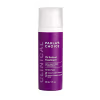


The best retinol products for your 60s, according to experts
Best retinol serum:

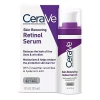
People in their 60s with more sensitive skin should try this retinol serum, which Patrick Davis, MD, a facial plastic surgeon in Beverly Hills, California, likes because of its use of encapsulated retinol. “The active ingredient is released more slowly into the skin over time, reducing the chances of irritation,” he says.
Additionally, hyaluronic acid hydrates, niacinamide soothes, and three essential ceramides lock in moisture and restore the skin barrier.
Daily moisturizer:


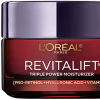
For added hydration and brightness along with the benefits of retinol, try this daily moisturizer. Shoshana Marmon, MD, PhD, a board-certified dermatologist, especially recommends this retinol cream for those women over 60 who have sensitive skin.
Pro-retinol visibly reduces wrinkles and firms, hyaluronic acid provides a boost of hydration and vitamin C simultaneously brightens and neutralizes free radicals.
Infused with hyaluronic acid:

“This is an affordable and usually well-tolerated option thanks to its creamy formulation and the inclusion of hydrating hyaluronic acid,” says board-certified dermatologist Dr. Ruth McTighe of this retinol cream, which she recommends for those with mature skin. It works to fade the look of deep wrinkles, including crow’s feet, forehead and cheek lines.
Formulated with peptides:

Davis is a fan of this retinol treatment for those with mature skin, especially if they’ve used retinol before. It absorbs into the skin quickly and diminishes the appearance of wrinkles and fine lines, while peptides and vitamin C work to reveal a revitalized glow. Licorice, oat and willow bark extracts also help calm redness and irritation.
It’s worth noting, though, that since it has a more potent 1% concentration of retinol, those with more sensitive skin may not react as well.
Retinol alternative:

If your skin is too sensitive for retinol, don’t despair — a retinol alternative like bakuchiol can work wonders, too. “The plant-based ingredient has effects similar to retinol while being better tolerated,” Dr. Brendan Camp, a board-certified dermatologist in New York, New York says. This serum helps smooth, plump and reduce fine lines, thanks to a combination of bakuchiol, brightening peptide precursors, centella asiatica extract and inka omega oil.
Multiple experts approve:

This retinol night cream is a favorite of Camp. “It’s appropriate for novices, experienced and expert users,” he says of the formula, which comes in three different concentrations (though he specifically recommended this one for mature skin).
It contains 0.5% pure retinol to help diminish fine lines and wrinkles and increase cellular turnover while you sleep, while a soothing complex with bisabolol and boswellia serrata extract comforts the skin.
Davis likes this retinol cream, too, and recommends applying it with the “sandwich” method. “Apply a moisturizer or hydrating serum followed by the retinol, and finish with an additional moisturizer,” he advises.
Ideal for travel:

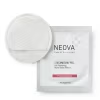
Want to use retinol on the go? These peel pads are so easy to pop in your purse before heading out the door. Each pad is formulated specifically to combat fine lines and wrinkles, smooth texture, exfoliate, unclog pores and calm inflammation. “They’re great for exfoliating the neck and décolleté as well,” Mraz says, who praises their individual packaging and easy application.
Gentle eye cream:

Vivian Bucay, MD, FAAD, a dermatologist in San Antonio, Texas, recommends this retinoid eye cream for people in their 60s with sensitive skin. “It’s well tolerated by the delicate skin around the eyes,” she says, adding, “I personally use this eye cream every night.”
McTighe notes, “This eye cream combines retinol with alpha hydroxy acids to reduce wrinkles, puffiness, and darkness around the eyes.”
Splurge-worthy night serum:

This night serum’s innovative dual-phase technology separates the rejuvenating ingredients from the soothing ones, which helps preserve their effectiveness and stability before application.
It’s a favorite of both Mraz and Bucay. “This is a great formulation for women with mature skin,” says Mraz, who adds that its ingredients “rejuvenate, renew and soothe the skin.”
Retinaldehyde is a vitamin A derivative that supports collagen production and skin renewal, melatonin defends against free radicals, and the retinol alternative bakuchiol restores elasticity and firmness. Additionally, the retinol serum has a soothing complex with niacinamide to hydrate and calm the skin.
What is retinol?
Before incorporating retinol into your anti-aging skin care routine, it’s important to understand what the ingredient actually is. “Retinol is a vitamin A derivative that has been clinically and scientifically proven to thicken the outer layers of the skin,” Davis says. “It can soften wrinkle formation and improve skin texture by stimulating collagen production.”
In short? Retinol is one of those miracle, Fountain-of-Youth-like ingredients that can help you see a true difference in the reduction of wrinkles and fine lines.
Should a 60-year-old woman use retinol?
Every dermatologist we spoke with for this piece raved about the inclusion of retinol in skin care routines for those with mature skin. “Retinol can be an excellent skin care option for women in their 60s,” McTighe says. “It can help with uneven pigmentation and texture, as well as improve the appearance of fine lines and wrinkles.”
Bucay agrees, since as we age, our skin loses collagen and subsequently becomes thinner and less plump, especially after menopause.
However, it’s worth noting that choosing retinol for mature skin can come with some complications. “Keep in mind that mature skin tends to be drier, and retinols can further exacerbate dryness,” Camp cautions. If you’re new to using retinol products, he recommends using actual retinol, instead of retinals or retinoids, which are stronger versions of retinol. You can also look for retinol alternatives like bakuchiol, which can offer similar benefits without redness or peeling.
What are the benefits of retinol, especially for mature skin?
While retinol has skin care benefits for all ages, there are some specifically for mature skin, too. The most noticeable benefits are a reduction in fine lines and wrinkles and improved skin texture. But it can do so much more.
Stimulating collagen production
“Because retinoids stimulate collagen production, consistent use will improve the appearance of thinning, crepey skin,” says Bucay. She notes that it can also improve skin thickness, which can lead to stronger, smoother skin.
Boosting skin cell turnover
Mraz notes that as we age, our cell turnover slows down to about every 60 days. “The benefits of boosting the skin cell turnover rate with a retinol are a brighter complexion, improved skin texture and tone, and an improved ability for the skin to absorb moisture and nutrients from your other skin care products,” she says.
The best retinol for older skin
There are three things to consider when choosing retinol for your 60s: the type of retinol, the formula and the percentage of retinol in your product.
Type of retinol
McTighe says, “Over-the-counter retinol creams and serums serve as excellent alternatives [to retinoids] for those who find prescription retinoids too drying or irritating,” she says.
Formula
While this can come down to a matter of personal preference, it’s certainly worth considering your skin type, too. “Creamier formulations are generally best for mature skin, since they provide additional hydration and barrier support which help offset dryness,” Marmon advises.
However, this doesn’t mean a retinol serum is out of the question! It just means you may need an additional moisturizer to really hydrate and nourish your skin. “I recommend a cream formulation for those who prefer to apply only one product, and a serum for those who like to layer additional products at bedtime,” Bucay says.
Percentage of retinol
Every retinol product is different — and that includes how much retinol is actually within the formula.
Since retinol can be irritating and drying, it’s always best to start with a lower concentration. “I recommend starting at a low dose with less frequent application and monitor for irritation,” says Davis, who advises using a formula with 0.25–0.5% retinol.
Camp agrees, especially if you haven’t used retinol before. “Lower concentrations are suitable for novice users, while higher concentrations are more appropriate for those who already have experience using retinol,” he says.
Frequently asked questions
The good news? Pretty often! Just start slow and work your way up as your skin gets used to retinol.
“I would start with using retinol every two to three nights for a few weeks, working your way up to four or five, and eventually as close to seven as you can tolerate,” Mraz advises. She also recommends checking in with your skin seasonally. “If your skin is prone to dryness and irritation in the winter, you may need to tailor back to a reduced frequency,” she says.
And one “hot” tip (pun intended): Don’t forget the sunscreen! Since retinol helps shed dead skin cells, it makes skin more sensitive to sunlight and harmful UVA and UVB rays — so don’t leave the house without your SPF.
“Retinols can potentially irritate skin, so they should not be used with ingredients that can also cause skin irritation,” Camp cautions. Those ingredients include:
- Lactic acid
- Glycolic acid
- Salicylic acid
- Benzoyl peroxide
- Alcohol-based toners
Davis also recommends spacing out your other skincare ingredients, especially ones like vitamin C. “When using Vitamin C serums with retinol, it is best to use them at different times of the day, and to keep a close eye on the potential for skin irritation,” he says.
However, Bucay recommends not using vitamin C at all with retinol. “It can cause skin irritation when combined with a retinoid,” she says.
Mainly, it’s best not to use too many different ingredients along with retinol, and to introduce it slowly into your skincare routine to see how it reacts with what you’re already using.
How we chose
We chose retinol products for people in their 60s based on advice given by dermatologists. We looked at the benefits of each recommended product, including ingredients, formulation, skincare benefits and price.
Meet the experts
At Shop TODAY, our reporters interview a range of qualified sources and experts to capture a wide scope of perspectives on a given topic. We also make sure that all expert guidance and recommendations are made independently and with no undisclosed financial conflicts of interest.
- Vivian Bucay, MD, is a board-certified dermatologist and the founder of the Bucay Center for Dermatology and Aesthetics in San Antonio, Texas. She is recognized for her expertise in minimally invasive facial rejuvenation through the combined use of neuromodulators, fillers and energy-based devices.
- Dr. Brendan Camp is a board-certified dermatologist at MDCS Dermatology in New York City.
- Patrick Davis, MD, is a facial plastic surgeon at Davis Facial Plastics in Beverly Hills, California. He and his team specialize in creating bespoke treatment plans to address concerns surrounding the aging face and neck.
- Deanne Mraz, MD, FAAD, is a fellowship-trained, board-certified dermatologist based in Newport, Connecticut. She is the president and co-founder of Modern Dermatology, the founder of DMR Research, and an Assistant Clinical Professor of Dermatology at Yale New Haven Hospital.
- Shoshana Marmon, MD, PhD, is a board-certified dermatologist and Assistant Professor in the Department of Dermatology at New York Medical College in Valhalla, New York. She is also the chair of the Menopause and Women’s Health Quality Improvement Committee for the American Academy of Dermatology.
- Dr. Ruth McTighe, MD, is a board-certified dermatologist at Waccamaw Dermatology in Mt. Pleasant, South Carolina.


