


While it's normal to see a handful of hairs going down the drain or getting stuck to your blowdryer's bristles post-blowout, there is such a thing as too much shedding. Before you panic about the strands found daily on your pillow, according to the American Academy of Dermatology, it's normal to lose around 50 to 100 hairs a day.
Now, if you've noticed more hair getting stuck on your brush after a detangling session lately, there could be a simple explanation: It may just be the change of season. We spoke to multiple dermatologists and hair experts to get all the details on seasonal hair loss (and some other potential shedding culprits), including why it happens and when it may be a sign of a bigger issue. Plus, we listed out the best remedies to encourage hair growth and minimize loss.
 A budget solution$8.95$9.99
 For instant volume$undefined$19.00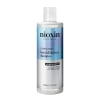
 Multi-expert recommended$29.97$32.69


What causes seasonal hair loss?
Seasonal hair loss is real, says Dr. Angela Lamb, a board-certified dermatologist. However, experts aren't actually 100% sure why it happens. "We think it may be due to perhaps dietary changes people make during different seasons or the weather change," Lamb says. "The hair goes through three cycles: Telogen, anagen and catagen. So it has growth phases, it has resting phases and then it has dying off, falling phases. And those can cycle at different rates. So people may just feel like they're losing hair, when it may just be that the hair is cycling differently at different times of the year."
Lamb says that it typically happens as the seasons change. "I've been seeing so much of it over the last couple of months," she adds. Anecdotally, for Lamb, it seems to be the most common in fall and winter as we transition from warmer to colder weather.
Dr. Robert Finney, a board-certified dermatologist in New York City, says that seasonal shedding typically peaks in September, though one research paper has suggested that there might also be a second uptick in April.
If you are concerned, it’s a good idea to make an appointment with your dermatologist for an evaluation. In the meantime, we’re sharing some expert-approved and reviewer-loved products for hair loss that you can use to revive your tresses.
How long does seasonal hair loss last?
Here’s the good news: Seasonal hair loss and telogen effluvium are temporary. “A true telogen effluvium is non-scarring, non-permanent hair loss,” Finney says. “And it’s usually something that occurs for a finite amount of time, whether it be six weeks or several months. And then, as long as you can identify the cause — or if you can’t, like in the event of postpartum — it just stops at one point, usually several months after, and you start to regrow.”
If you see an uptick in shedding and it matches up with one of the above common causes, Finney says, “try not to focus on it too much, but maybe set a reminder in your calendar to check back in in two weeks or four weeks and kind of reassess.” If it hasn’t stopped by then, see your dermatologist who can evaluate this concern. “That’s when we’ll usually check bloodwork to make sure there’s not an underlying medical condition,” he added.
Best products for hair loss, according to dermatologists
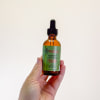
A budget solution:


“This is a great example of a product that does not dilute the rosemary oil too much,” Rogerio Cavalcante, a hairstylist and colorist, previously told us. “It is inexpensive and easy to apply at night before a wash day.” Rosemary oil is a great natural solution for those who are unable to use or prefer alternatives to minoxidil, as its results are equivalent to the ingredient, per our ingredients for hair loss coverage.
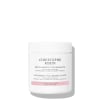
For instant volume:

If you just want your hair to look a little fuller during times of temporary shedding, Lamb says that you can use a cosmetic product to add more volume to the hair. As someone who experienced postpartum hair loss, she says that this paste was something she used to help her hair look more voluminous.
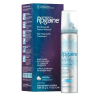
Multi-expert recommended:

Nearly all of our experts recommended Rogaine as a tried-and-true solution for hair loss. The treatment has been clinically-proven to boost hair growth when used consistently.
One thing to note though: “One of the common side effects is increased shedding when you first start it,” Finney says. “For people who are already shedding, it can be a little alarming. So I always counsel that it’s normal, it’s just kicking your hair that was about to go into the resting phase out. It’s going to regrow, and it’s going to regrow healthier.”
Recommended for sensitive scalps:

Dr. Liia Ramachandra, a skin care expert and former pharma executive, previously told us that this shampoo is great for those with sensitive scalps. It’s made with ingredients like biotin, nettle extract, pumpkin seed and black cumin seed oil, which the brand says help increase volume and thicken hair.
Easy application:

“This is a tried-and-true treatment that promotes faster, thicker hair growth,” Dr. Leah Jacob, an assistant professor of dermatology at Tulane University, previously told Shop TODAY. “Newer formulations allow for easier, less messy application.”
Minimizes shedding:


“I recommend this hair serum by Vegamour because it is formulated with ingredients like caffeine and biotin,” Dr. Dara Spearman, a board-certified dermatologist, previously shared. “This product is also ideal for people experiencing a lot of hair shedding as it helps prevent thinning hair, supports fuller hair over time, and promotes overall scalp health.”
A minoxidil alternative:

Board-certified dermatologist Dr. Michelle Henry previously recommended this lotion, which contains diaminopyrimidine oxide, ginkgo biloba and biotin, as an alternative to minoxidil. It’s designed to be applied to your scalp daily to boost hair volume and thickness over time — without leaving a greasy residue.
Best products for hair loss, according to editors
Lift without the residue:


This all-day root lifting treatment promises to 'spring' thinning hair without weighing it down. And according to commerce writer Danielle Murphy, the results are noticeable. “I wish I had grabbed a ruler to measure just how high my hair ended up being, because I had never seen such fast-acting results,” she said in her review. “I also now fully understand the meaning of hair ‘fullness’ because, along with my roots, all of my hair felt like it got a boost.”
Supports scalp health:


Hair health starts at the scalp. For a hair loss remedy that doesn't forget the scalp, associate editor Shannon Garlin recommends the multi-peptide hair serum from The Ordinary.
"My hairline looks fuller, and there’s new growth starting to appear," she wrote. "I even have family and friends commenting on how long my locks have gotten. Overall, I feel like my entire head of hair looks and, most importantly, feels healthier."

Before you wash:

One product editorial assistant Madison San Miguel has incorporated into her routine as someone with thinning hair is the Briogeo Scalp Revival Rosemary Pre-Wash Scalp and Hair Oil. She notes that the moisturizing treatment can be used overnight or before washing, helping to nourish dry ends and scalp to promote a healthier scalp and hair follicles. Read more of her review here.
Award-winning formula:


After suffering from stress-induced hair loss, commerce editor and producer Julie Ricevuto relied on a three-step routine to regrow her hair. One product she praised for her noticeable results was this shampoo from Nioxin, which uses caffeine, lauric acid and niacinamide to 'wake up' the hair follicles.

An entry into minoxidil:

With 2% minoxidil, this treatment spray is a good entry solution for those new to the ingredient, as some formulas can come in a stronger option. “I didn’t feel any side effects or have anything concerning happen, so I would recommend it to others looking for a solution,” said trends editor Vivien Moon. “It’s easy to apply, and I especially loved that it only took a minute to apply it once a day (that’s what I was doing at least).”
Best for hairlines:


If you're experiencing hair loss around the hairline and temples, the Cécred Restoring Hair & Edge Drops, founded by singer-songwriter Beyoncé, has rave reviews from editors and customers alike for filling in thin and sparse areas. In fact, Nicole Collazo Santana, social media video producer for TODAY, said in our Beauty Awards trials that the product “made my hair feel more full without weighing down my curls.”
Frequently asked questions
If you’re just experiencing seasonal shedding, it won’t make a big difference in your mane overall as the hair will grow back. But if you are noticing a big difference in volume or are seeing more of your scalp than before, it could be a sign of an underlying issue.
“If you’re noticing it, you likely have a component of genetic hair loss underlying it, and now you’re noticing it more, especially if you’re in your 30s, 40s or 50s,” Finney says. “Because when you have a portion of your hair shed, say like 10% of it sheds, it’s a lot more noticeable if you only have 50% of what you started with when you were a kid. Whereas if you still had 100% of your hair, no amount of shedding is really going to be noticeable.”
Aside from the change in seasons, there’s another potential explanation for why you’ve been losing more hair recently: COVID. Research has shown that some people experience hair loss as a long-term side effect after being infected with the virus. This is because telogen effluvium, otherwise known as “stress-induced hair loss,” can occur after illness, hospitalization or postpartum, Finney says. While COVID and hair loss have been linked, the reasoning behind the connection is unclear.
How we chose the best products for seasonal hair loss
The Shop TODAY team spoke with experts in the hair industry, including dermatologists Dr. Angela Lamb, Dr. Robert Finney and Dr. Leah Jacob, to gain insight into choosing the right treatment for hair loss, as well as tips for proper usage. We then scoured the internet and chose shopper-loved items that met the guidelines provided by the experts.
Meet our experts
At Shop TODAY, our reporters interview a range of qualified sources and experts to capture a wide scope of perspectives on a given topic. We also make sure that all expert guidance and recommendations are made independently and with no undisclosed financial conflicts of interest.
- Dr. Angela J. Lamb, is a board-certified dermatologist based in New York City. She’s currently the Vice Chair of Clinical Operations at Mount Sinai Dermatology.
- Dr. Robert Finney is a board-certified dermatologist based in New York City who specializes in hair loss and cosmetics.
- Dr. Leah Jacob is an assistant professor of dermatology at Tulane University.
- Rogerio Cavalcante is a hairstylist, colorist and the founder of The Second Floor Salon in New York City
- Dr. Michelle Henry, MD, is a board-certified dermatologist in New York City.
- Dr. Liia Ramachandra, Pharm.D., Ph.D., is a doctor of pharmacy and analytical chemistry based in Canoga Park, California. She is the co-founder and CEO of EpiLynx, a skin care and cosmetics company.
- Dr. Dara Spearman is a board-certified dermatologist and founder of Radiant Dermatology Associates.

