


Have you ever caught a glimpse of new dark spots in the mirror? They may be sun spots. While spending time outdoors has its benefits, too much UV exposure can take a toll on your skin. Whether you’re outside every day or spend most of your time indoors, protecting your skin from the sun is essential.
According to New York City-based dermatologist Dr. Joshua Zeichner, sun spots develop when the skin produces excess melanin, its natural pigment, in response to UV exposure. Beverly Hills-based dermatologist Dr. Jessica Wu explains that these flat brown marks — also known as age spots — typically appear after years of cumulative sun exposure.
The good news? Sun spots can often be treated at home or with the help of a dermatologist.
If you’re hoping to prevent new spots or fade existing ones, sunscreen should always be your first line of defense. But for those looking to target discoloration that’s already there, dermatologists recommend incorporating an antioxidant-rich serum into your routine for added protection and brightening benefits. Below, discover the serums experts recommend for treating and preventing sun spots.
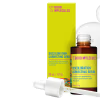 Budget-friendly serum$undefined$12.00
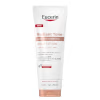 Derm-recommended body lotion$undefined$22.49
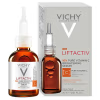 Derm-approved vitamin C$undefined$34.99


How do sun spots occur?
“Exposure to environmental aggressors like UV light, infrared radiation, and pollution can stimulate skin cells to produce extra pigment, causing sun spots, “ Zeichner says.
These harmless spots typically appear on sun-exposed areas of the skin, and New York-based dermatologist Dr. Hadley King says that lighter skin tones and genetic background also play a part in susceptibility.
“They are caused by sun exposure, plus a susceptible genetic background,” King shares. “Lighter skin types are more vulnerable to solar lentigines.”
“While they’re harmless, they signal that your skin has experienced enough UV exposure to alter how pigment-producing cells, called melanocytes, function,” adds Beverly Hills-based dermatologist Dr. Jessica Wu.
Dermatologist-recommended serums for sun spots

In the budget-friendly category, this correcting serum is designed to fade dark spots, post-acne marks and other discoloration. “This is a combo of cetyl tranexamate mesylate, an advanced form of tranexamic acid, with niacinamide. It uses two different pigment pathways. It’s especially useful for diffuse, mottled sun damage rather than one very dark, sharply defined spot,” shares Wu.


“It’s in the acne aisle, but adapalene is a retinoid shown to reduce sun spots. Differin increases cell turnover across the entire face, so it treats sun damage throughout the area. Use a pea-sized amount over the whole face two nights a week at first, then increase slowly as tolerated,” recommends Wu.

Garshick suggests looking for serums with vitamin C. She especially loves the Vichy LiftActiv Serum for its antioxidant properties.
“Serums containing antioxidants, such as vitamin C, are a great way to help prevent sun spots from developing,” Garshick says. “The antioxidants help protect the skin from free-radical damage, which can trigger the changes seen in the skin with sun spots.”

Combining SPF with antioxidants, this serum aims to protect skin from the sun while helping to smooth fine lines and improve the appearance of dark spots.
Garshick recommends this serum because it incorporates a sunscreen component, which she says is one of the most effective ways to protect your skin from sun damage.
“The most important topical you can apply to your face to prevent sun spots is sunscreen or sun protection, and it is important to reapply throughout the day,” Garshick said. “So making sure to incorporate SPF into your daily routine is essential.”

This serum comes recommended by all four dermatologists that Shop TODAY spoke with. Dr. Angela Lamb, a dermatologist for Westside Mount Sinai Dermatology, specifically recommends using this serum in combination with retinols to help lock in moisture and provide protection against the sun and skin pollutants.
Multiple editors also vouch for the serum noting that it has shown improvement in their skin and how well it fits into their routines.
Editor-approved serum for sun spots


I’ve [Espinal] been using this restorative formula consistently for the past few months, and it’s become a staple in my routine. As someone with chronically dry skin, I’m always looking for products that strengthen my moisture barrier, and this cream has done just that. Beyond delivering lasting hydration, I’ve noticed my complexion looks smoother, more even, and noticeably clearer since I started using it. It may finally be the answer my thirsty skin barrier has been searching for.
Dermatologist-recommended body care to treat sun spots

“This is excellent for sloughing off heavily pigmented surface cells through high-potency exfoliation and deep humectant hydration,” says aesthetic doctor Dr. Ivy. The gentle ingredient helps remove dead skin cells while supporting a softer, more radiant complexion. Plus, its versatile formula can be used on both the face and body, making it an easy all-over treatment for dry, uneven skin.

For those looking to target stubborn sun spots on areas beyond the face, Eucerin Radiant Tone offers a targeted approach with its key ingredient, Thiamidol. According to Wu, this ingredient is “shown to inhibit the enzyme involved in producing excess pigment,” helping to address the root cause of discoloration and improve the appearance of dark spots over time.

Reduce the appearance of uneven skin tone with this buttery-textured body treatment from Paula’s Choice, formulated with retinol to help improve the look of sun spots. “Delivers encapsulated retinol to speed up cell renewal across large body areas without causing harsh peeling or barrier damage,” shares Ivy.
How to get rid of sun spots on the face
A consistent skincare routine is key to fading sun spots and preventing new ones from forming. Ivy recommends a simple regimen centered on three principles: protecting skin by day, renewing it by night and allowing time for recovery once a week. In the morning, she suggests using a brightening serum with ingredients such as vitamin C, tranexamic acid, or alpha-arbutin, followed by a broad-spectrum SPF 50 sunscreen to shield skin from further UV damage.
At night, she recommends incorporating a retinoid to promote healthy cell turnover while pairing it with barrier-supporting ingredients such as niacinamide or ceramides to help minimize irritation. “Once a week, such as on Sundays, take a break from active ingredients and focus on recovery with soothing, barrier-repairing products containing panthenol and ceramides,” she adds.
How to get rid of sun spots on the body
While sun spots are often associated with the face, dermatologists say the body deserves just as much attention. “The body often gets overlooked, but areas like the chest, shoulders, forearms and backs of the hands receive years of sun exposure,” says Wu.
Dr. Ivy adds that body skin is thicker and slower to heal, making areas such as the arms, chest, hands and legs especially prone to lingering discoloration. To help address and prevent sun damage, Wu recommends body care products that combine gentle exfoliation with brightening ingredients, such as lactic or glycolic acid body lotions to encourage healthy cell turnover, vitamin C body serums or lotions for antioxidant protection and retinol body lotions for more established sun damage, particularly on the arms and chest. She also stresses the importance of applying a broad-spectrum sunscreen daily to exposed body areas, even for everyday activities like driving or running errands.
Frequently asked questions
While there are countless products marketed to treat sun spots, Wu says a handful of dermatologist-backed ingredients consistently stand out. “Vitamin C is a powerful antioxidant that helps brighten existing discoloration while protecting against free radical damage from UV exposure,” she says.
She also recommends retinoids, including over-the-counter retinol and prescription-strength tretinoin, which increase cell turnover to fade dark spots while stimulating collagen production gradually.
Niacinamide is another favorite because it “helps reduce the transfer of pigment within the skin while strengthening the skin barrier,” while azelaic acid is “excellent for improving uneven pigmentation and calming inflammation,” making it especially beneficial for those with sensitive skin.
Tranexamic acid is “one of my favorite newer brightening ingredients, particularly for stubborn pigmentation,” she adds.
Above all, Wu emphasizes that “broad-spectrum sunscreen is truly the most important ‘anti-dark spot’ product” because it helps prevent existing pigment from becoming darker while reducing the formation of new spots. She also encourages patients to think beyond topical skincare, explaining that “a colorful, antioxidant-rich diet, good sleep, stress management and avoiding smoking all help support the skin’s ability to repair oxidative damage. Healthy skin starts from within.”
How we chose
We selected the best products to treat and prevent sun spots based on guidance from board-certified dermatologists. After consulting experts, researching the market and reviewing editor-approved favorites, we prioritized antioxidant-rich serums and treatments formulated with ingredients dermatologists frequently recommend for fading discoloration and protecting against future sun damage.
Meet the experts
At Shop TODAY, our reporters interview a range of qualified sources and experts to capture a wide scope of perspectives on the latest beauty products. We also ensure that all expert guidance and recommendations are made independently and without undisclosed financial conflicts of interest.
- Dr. Joshua Zeichner is a director of cosmetic and clinical research at Mount Sinai in New York City.
- Dr. Marisa Garshick is a board-certified dermatologist at MDCS Dermatology.
- Dr. Jessica Wu is a Harvard-trained Beverly Hills-based dermatologist.
- Dr. Ivy is an aesthetic doctor and founder and president of the Academy of Face Design in London.
- Dr. Hadley King, MD, FAAD, is a board-certified dermatologist in New York City. She specializes in medical and cosmetic dermatology and is also a clinical instructor of dermatology at the Weill Medical College of Cornell University.
Paid for by Sam's Club


Paid for by Sam's Club
