


The word “damaged” has a scary ring to it. We all put our hair through the ringer as we experiment with different heat styles, products and tools, and as we get older, hair can start to feel dryer and lose its shine as the transition into gray occurs.
But just because you might need to start thinking about a tailored hair care routine for the first time in your life doesn’t mean it has to be an overwhelming process. To get prepared, it’s best to familiarize yourself with the best ingredients that can help revive dry, lifeless hair and ingredients that can help reverse already damaged hair.
In addition to a regular hair care routine, there are a few extra steps like masking and leave-in conditioners that can help the process even further. To find out everything you need to know about how to revive dry, damaged or aging hair, we tapped a few experts who shared the routines they share with their clients, their go-to products, and more.
 Best hair mask$undefined$45.00
 Editor-favorite co-cleanser$undefined$46.00


What does damaged hair look like?
Hairstylists Rachel Lita and Lauren Clark share the following as common physical signs of damaged hair: split ends, frizz, texture changes (for example, hair going from soft-to-the-touch to more straw-like and tough), thinning hair and losing length after continuous up-dos due to hair loss.
Best products for damaged hair, according to experts
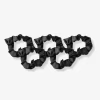
Gentle, silky scrunchies: Kitsch Satin Sleep Scrunchies

- Affordable product
- They don't tug on hair
- May lose elasticity easily
Product type: Scrunchies | Material: Satin lined
Lita likes these soft scrunchies from Kitsch. This set of five scrunchies is also offered in other colors and packs with different combinations.
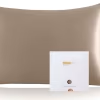
Smooth sleeping surface: Zimasilk Silk Pillowcase

- Multiple colors available
- High-quality material
- Only one pillowcase included
Product type: Pillowcase | Material: Silk
Lita also emphasized the importance of using silk pillowcases for sleep. This option from Amazon comes in 30 colors and has over 33,000 verified five-star ratings. One reviewer said it’s helped them lessen breakage and it holds up well over several washes.
Great for dandruff management: dpHue Apple Cider Vinegar Scalp Scrub

- Suitable for all types of hair
- Gentle on hair
- Some reviewers dislike the scent
Product type: Scalp scrub | Key ingredients: Apple cider vinegar, Himalayan salt, aloe leaf juice
Clark also likes this apple cider vinegar scalp scrub from dpHue that’s made with pink Himalayan sea salt. She personally uses it for managing managing dandruff and says the scrub does a great job.
Works for "weeks on end": Amika The Kure Intense Repair Mask

- Doesn't have an overwhelming scent
- Some packaging and delivery issues noted
Product type: Scrunches | Key ingredients: Sea buckthorn, plant butters
Lita used this hair mask herself after experiencing damage and says it helped bring her hair back to life.
“With masks, it’s a temporary fix but what I really like about the Amika one is that I feel like even if I don’t use it. [...] It keeps your hair soft for weeks on end,” she says. “I feel like it’s actually doing what it needs to do rather than just being a silicone covering over your hair for a temporary fix.”
Vegan duo: Vegamour GRO Revitalizing Shampoo and Conditioner Kit

- Comes as a kit
- Has a good scent; isn't overpowering
- Expensive for size of product
- Reviewers saw results, but after a couple months of consistent use
Product type: Shampoo and conditioner | Key ingredients: Karamatin, marula oil, murumuru butter, baobao oil, biotin, caffeine, biomimetic peptides
Clark likes Vegamour because it’s “totally vegan, plant-based and organic,” she says. Introduced to the brand by her grandmother, she likes their focus on rebuilding the strength and health of the hair and scalp.
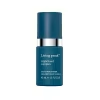
Best for aging hair: Living proof Triple Bond Complex Leave-In Treatment and Hair Mask

- Improves hair after first use
- Travel-friendly packaging
- Has fragrance
Product type: Leave-in hair mask | Key ingredients: Encapsulated cellular oil, jojoba esters
Stanley Nolan, a cosmetologist and beauty education specialist, recommends this hair strengthener to help reduce any visible signs of existing damage within aging hair. The amount of product that you use will depend on both the length and thickness of your hair. For example, if you have short, fine hair, you’ll use two pumps of product and if you have thick, coarse and long hair, you’ll use over six pumps to evenly coat strands.
Jess Bender, a senior editor at Shop TODAY, also recommends this product. She says, "I don't often use heated styling products beyond when I'm going to a heavy-duty workout or swimming or the spa, so this bonding treatment resides in my gym bag for when I want my hair to look super spiffy in a jiffy. (Sorry for the rhyme!) The way a small amount — just about a nickel's amount — this smooths out and shines my locks while mending breakage, frizz and other effects of chlorine, humidity or heat are seriously unmatched."
Splurge-worthy for aging her: Alterna Caviar Anti-Aging Replenishing Moisture Shampoo/ Conditioner

- Free of sulfates
- Higher price point
Product type: Shampoo and conditioner | Key ingredients: Caviar extract, omega-3s
This shampoo and conditioner duo is packed with omega-3s that help replenish the hair’s lipid layer, along with caviar extract that packs the hair with nutrients. Nolan also recommended this set as a duo to help with aging hair, and she loves this combo for daily protection from damage.
Best products for damaged hair, according to editors
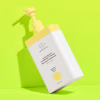
Condition and cleanse: Drunk Elephant Laini Latherless™ Conditioning Co-Cleanser

- Easy to recycle
- Lots of product in package
- Requires effort to pump out
Product type: Conditioning co-cleanser | Key ingredients: Rose hip fruit oil, virgin marula oil, sacha inchi seed oil
Bender also recommends this conditioning co-wash and says, "Whenever I need to give my tresses and scalp a bit of a reset, I like to rely on a co-cleanser like this one. It's loaded with ingredients that defrizz and conditions without weighing down, making my hair feel nearly as soft as it would when I would get it professionally washed."
For stronger, silky hair: Kérastase Resistance Strengthening Hair Mask for Damaged Hair

- Smells good
- Long lasting
- Packaging isn't easiest to use
Product type: Hair mask | Key ingredients: Pro-keratin complex, ceramides, resurrection plant sap
Vivien Moon, an editor at Shop TODAY, says, "This is one of the few products that I used until the last drop and was sad to finish. Whenever my hair needed a bit of TLC, I would reach for this mask and would notice and improvement immediately. I have thin, dry (ends) hair that is damaged from years of heat and dyes so this mask always makes my hair silky smooth."
Tips for avoiding and managing damaged hair
Both stylists offer a few tips to help you avoid (or manage) damaged hair.
Firstly, let your hair exist as is, Clark suggests. If you’re spending the day (or a few days) at home, don’t touch it. Don’t brush it or put it in a tight style — a tip that Lita echoes. If you have to go to work, she suggests washing it with a conditioning treatment and putting it up in a bun with a silk scrunchie for the week. If you want to flat iron it, only apply heat on the days you have work and keep your hot tools unplugged on the weekends.
“The less you brush, the less you touch, the less you fidget with your hair, the more it’s gonna grow,” she says.
If you do have to brush your hair, though, brush with purpose.
“If you’re brushing it out before you shampoo because you want to get the tangles out, that’s good,” Clark notes. “But just blindly, mindlessly brushing your hair throughout the day is one of the worst things you can do to your hair.”
She also says that if you hear snapping noises while brushing, it’s probably a good indication that you should either brush a little gentler (or not at all) or you might need a haircut. However, this also depends on the hair texture.
“With finer hair, it might be more of a cause for concern than it would typically be for thicker hair,” she adds.
No matter your hair type, Lita recommends getting regular trims every six to eight weeks and using a silk pillowcase to reduce damage.
“When you have cotton sheets, the way cotton is woven, your hair actually can get caught between the weaving and it pulls on it. When you’re sleeping, you’re tossing around, turning. Your hair can get caught [and] interwoven in the fibers,” she says. “You’re turning, you pull too hard, you’re pulling out a couple of hairs at a time. Depending on the cotton, it can be a little more rough. Whereas silk, it just glides. There’s no holes in it. And if there are, they’re miniscule.”
Finally, both stylists encourage you to invest in “good” products that will give you the best results. Clark is a self-proclaimed “big advocate of buying professional-grade products.” She acknowledges that everyone’s budget and lifestyle is different but, if you can afford it, it’s worth it to regularly invest in higher-end hair products and says it can be as simple as looking at the professional hair section at Ulta. If you can’t afford to shell out the big bucks consistently on higher-end products, she suggests investing in it at least once and using it on an alternating schedule with the products of your choice to get the most value.
The best ingredients for damaged hair
To simplify your hair care routine even further, hairstylist Rogerio Cavalcante says to “look for products with keratin, amino acids, hydrolyzed proteins, ceramides, hyaluronic acid, argan oil and panthenol.”
These will repair lost moisture, hydrate and strengthen the hair, he adds. Make sure to “avoid harsh sulfates and alcohols that can strip moisture.”
Ingredients to avoid for damaged hair
Clark advises avoiding any products that have an ingredient with the suffix “-cone” because that indicates it’s a silicone-based ingredient. While she says you can find dimethicone in many products and it’s a good ingredient for taming frizz on the surface, it actually isn’t beneficial for hair health.
“It basically coats the hair cuticle and disallows water to penetrate so your hair becomes brittle. If you use those products over and over and over again, it kind of makes your hair drier,” she warns.
Lita recommends avoiding coconut oil, calling it “extremely drying.” If you want to use an oil in your hair, she suggests using olive or almond oil instead. She also says that shampoos with dye in them to maintain color can be “extremely drying and not color safe.” Instead, she suggests putting color dye in your conditioner and applying it that way.
Frequently asked questions
Both Cavalcante and Nolan say you can repair damaged hair — to an extent. “While you can’t ‘restore’ hair to its original state, consistent care with repairing products, regular trims, and protective styling can significantly improve its health and appearance,” explains Cavalcante.
Clark notes that damage can occur at different levels for different hair textures. As someone with more coarse, textured hair, she says her threshold for things that can potentially cause damage is higher than someone else with fine hair.
“[Fine hair] can’t handle much wear and tear,” she adds. While she and Lita both say regular hair dye won’t cause as much damage as people think, Clark specifically calls out over-highlighting finer tresses as a cause for breakage.
Lita similarly calls out bleaching your locks as a common cause of breakage, but adds overexposure to the sun onto her list of culprits.
“There are sprays that are like sunscreen for the hair because, just like how your skin can get burned, it’s the same thing for your hair,” she says.
Both Clark and Lita also call out damage due to using heat styling products. Temperature matters and Lita says damage can occur if the tools are too hot and/or you’re not using a proper heat protectant. If you have fine hair, Clark suggests avoiding blow drying or heat styling often, limiting it to about once per week.
Both stylists also say lifestyle choices can lead to damaged hair like brushing your hair too much, according to Clark. Lita, meanwhile, says damage can occur from wearing your hair tied too tightly or even wearing hats too often because it can inhibit your scalp’s ability to breathe.
How we chose
Before choosing the best products for damaged hair, the Shop TODAY team spoke with various hair care professionals including hairstylists and a beauty education specialist. We also included some products recommended by editors.
Meet the experts
- Lauren Clark is a Los Angeles-based celebrity hairstylist.
- Rachel Lita is a Los Angeles-based celebrity hairstylist.
- Stanley Nolan is a cosmetologist and beauty education specialist at Ogle School.
- Rogerio Cavalcante is a hairstylist and owner of The Second Floor Salon in New York City.

Ninja BlendBoss Tumbler Blender


Ninja BlendBoss Tumbler Blender
