

The demand for K-Beauty products continues to be on the rise year after year. In fact, research shows the U.S. will soon become the biggest K-Beauty market, with additional data revealing the industry alone was worth $118.28 billion in 2025.
But what's the secret behind the love? Most K-Beauty products range from $10 to $30. While the attainable price point makes them appealing to the masses, many consumers argue that K-Beauty formulas are more innovative and simply better.
When it comes to Korean sunscreens, though, some users even claim they're more protective than Western formulas. "Korean consumers tend to prioritize skin care and sun protection, leading to a demand for high-quality, effective sunscreens that are pleasant to use," says board-certified dermatologist Dr. Dara Spearman.
While this desire for innovative skin care makes the K-Beauty market overall stand out, what makes Korean SPFs different and should you replace your current sunscreen for one? We reached out to experts to share their thoughts and product recommendations, along with some editor picks.
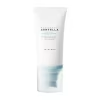 Best for combination skin$17.99$20.14
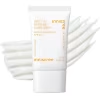 Dermatologist- & editor-loved$undefined$18.00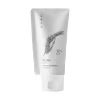


What makes Korean sunscreens different from Western formulas?
"Due to regulatory differences, Korean sunscreens have newer UV filters that are not approved for sale in the United States," says Spearman. "These newer filters may offer broader spectrum protection and more cosmetically elegant formulations."
However, “part of the reason for this is the requirements needed to approve UV filters, which are classified as drugs,” says double-board certified dermatologist Dr. Brendan Camp. Cosmetic chemist Esther Olu also adds that Korean SPFs rely on the PA system (which determines a product's ability to block UVA rays), which U.S. sunscreens don't often use.
Besides formulation, you may also notice a difference in texture and finish between the two. "Many are formulated as gel creams, essences, or emulsions that absorb quickly, leave little to no white cast (unless of course, they are a mineral sunscreen or a tone-up sunscreen), and also layer well under makeup," Olu notes. "This allows for a good number of Korean sunscreens to be optimal for daily usage."
Are Korean sunscreens better?
Not necessarily. All of our experts agreed that while Korean sunscreens have some notable advantages, whether they're viewed as 'more effective' (UV protection) or 'better formulated' (list of ingredients) is subjective to the consumer.
For instance, "From a formulation standpoint, Korean sunscreens (as well as most international sunscreens) often include newer, broad-spectrum filters that offer superior UVA protection and have enhanced photo-stability compared to some of the common filters currently approved by the FDA," explains Olu. "This allows for more enhanced, stable sun protection."
"However, it’s important to consider regulatory limitations," Olu continues. "Many of the advanced filters used in Korean sunscreens are not yet approved for use in the U.S., and the barrier to entry is now higher due to the enhancement of MoCRA. Thus, I would argue their perceived superiority is partially due to broader ingredient access, not necessarily better scientific principles."
Whether you decide to shop for a Korean or Western sunscreen, Olu says "you will get great protection" from both nonetheless.
Best Korean sunscreens, according to experts and editors
Best for combination skin:


Olu recommends this nearly sold-out sunscreen for acne-prone and/or dry skin (and almost all skin types, she adds) because it is a "standout formula" that "feels almost weightless on the skin."
"It combines centella asiatica, known for its calming and barrier-supporting properties, hyaluronic acid, glycerin and other humectants to maintain hydration throughout the day," she details. "The finish is slightly dewy but not greasy. It also layers well under makeup, which is a plus in my book!"
Best for acne-prone skin:


"This sunscreen has a very light, almost gel-cream consistency, which makes it excellent for oily or acne-prone skin," recommends Olu. "It absorbs quickly and leaves a satin-matte finish with minimal residue or stickiness."
Olu herself has combination skin and says this SPF balances oil control and hydration well. "The minimal to zero white cast and gentle ingredients also make it a solid choice for sensitive skin in my opinion," she suggests. "It also layers well under makeup and doesn’t pill, which is a plus for daily wear."
Dermatologist- and editor-loved:


Camp and Shop TODAY commerce writer Danielle Murphy both recommend the Innisfree Daily UV Defense since it is "formulated with green tea to provide antioxidant protection and sunflower seed oil for improved hydration of dry skin," Camp notes.
"This is one of the only face sunscreens that I’ve fully emptied — and I miss the formula," boasts Murphy. "It feels great on the skin and doesn’t leave a white cast. It’s also one I would recommend for wearing under makeup because it doesn’t interact with any of the products I use."
Best for dry, mature skin:

"This sunscreen is rich in hydration and emollient ingredients, and features a smooth, cream-based texture that provides moisture without heaviness," explains Olu, while traditional Korean rice extract offers the skin soothing and brightening benefits.
"While I think this may feel a bit too rich for oily skin types, it’s perfect for drier or more mature skin needing extra nourishment throughout the day," Olu suggests, adding that the SPF could even be replaced for a standalone moisturizer.
Best for irritated and dehydrated skin:


This chemical sunscreen uses mineral water and centella asisatica (cica) in a creamy-rich formula to soothe irritation and hydrate the skin, which dehydrated and dry skin types will appreciate. It also contains SPF 50 to protect the skin from "harmful UV rays that cause sunburns and early visible signs of aging," adds Camp.

Oars + Alps Face & Scalp Sunscreen Spray Mist
Winner: Best SPF for scalp
$15.99
Amazon
$16.00
Ulta
$16.00
Oars + Alps

Blue Lizard After Sun Soothing Lotion
Winner: Best post-sun care
$12.94
Amazon
$12.94
Walmart
$12.99
Target

Banana Boat Sheer Sensitive Sunscreen Spray SPF 50
Winner: Best body sunscreen
$9.99
Target
$11.99
Walgreens
$12.49
CVS Photo

Naturium Phyto-Glow Lip Balm SPF 45 Clear
Winner: Best SPF lip product
$9.99
$12.50
Amazon
$12.50
Naturium

Tatcha The Milky Sunscreen SPF 50
Winner: Best lightweight sunscreen
$50.00
Amazon
$50.00
Tatcha
$50.00
Sephora

SkinCeuticals Future Mineral UV Defense Sunscreen SPF 50
Winner: Best mineral sunscreen
$51.00
$60.00
Dermstore
$60.00
Skinceuticals

bareMinerals Original Talc-Free Pressed Powder Foundation Mineral SPF 15
Winner: Best SPF powder foundation
$39.50
Amazon
$39.50
Ulta
$39.50
bareMinerals
Best lightweight sunscreen:


If you want a healthy glow as well as protection, then look no further than this sunscreen, a Shop TODAY Sunscreen Awards winner. This option is rich with collagen and peptides, cica, niacinamide, and hyaluronic acid for an effective treat for the skin.
Best for dry skin:

The brand calls the Aqua Bomb a 'two-in-one' product because it protects like an SPF should, yet moisturizes just like a moisturizer. And according to some reviews, you could even ditch your face cream and just use this product alone.
It also has SPF 45, and contains "botanical ingredients from woodbine, marigold and noni extracts to offer antioxidant protection and help skin recover from the impact of UV rays," Camp says.
If you prefer a mineral SPF:

Both trends editor Vivien Moon and associate editor Kamari Stewart love the lightweight texture of this mineral SPF. With ingredients like hyaluronic acid and coconut oil, the sunscreen is also hydrating and nourishing without being too heavy on the skin. "Plus, it doesn’t leave behind any white cast, which is amazing," adds Stewart.
Worth the splurge:


"This is a great lightweight formula that does not leave a white cast or any greasy residue, which makes it great to put under makeup as well," says Spearman. "The ingredients work to protect against UVA and UVB rays while nourishing the skin and protecting from environmental factors."
While good for most skin types, the dermatologist suggests that "if you have sensitive skin, I always recommend a patch test."
Frequently Asked Questions
"When evaluating Korean sunscreens, many of the same principles that apply to any sunscreen still hold true (because at the end of the day, Korean sunscreen is still sunscreen!)," claims Olu. "In my professional opinion, the most important things to look for include broad-spectrum protection, the PA rating system (A PA+++ or PA++++) rating is ideal, especially if you’re concerned about long-term effects like hyperpigmentation or photoaging, etc."
Camp adds that your sunscreen, regardless, should be a water-resistant product with "a minimum SPF 30 broad-spectrum coverage," per the American Academy of Dermatology (AAD).
"That aside, look for a sunscreen that will also improve the health of your skin in addition to protecting it from UV rays," he suggests, including searching for sunscreens with "niacinamide, hyaluronic acid, ceramides and antioxidants."
"Given recent regulatory updates under MoCRA, it’s important to be aware that online retailers based outside the U.S. are no longer permitted to directly sell non-FDA-approved sunscreens within the US (technically it was never allowed but the FDA is becoming more stringent with the enactment of MoCRA)," explains Olu. "This means some Korean sunscreens are no longer legally sold through major platforms like Amazon or smaller US-based online shops," but you can still shop for Korean sunscreens from authorized international retailers.
How we chose
We leaned on the recommendations and expertise of dermatologists and cosmetic chemists to select the best Korean sunscreens. We also tapped into the knowledge of Shop TODAY editors, asking them to share their favorite K-Beauty SPFs they own and love.
Meet the experts
- Esther Olu is a cosmetic chemist, licensed esthetician and instructor.
- Dr. Brendan Camp is a double board-certified dermatologist in dermatology and dermatopathology at MDCS Dermatology.
- Dr. Dara Spearman is a board-certified dermatologist and the founder of Radiant Dermatology Associates.

Ninja BlendBoss Tumbler Blender

Ninja BlendBoss Tumbler Blender
