


Wireless earbuds aren’t one-size-fits-all. They come in different shapes, sizes and styles, and many people don’t realize which type works best for their ears until they’ve already bought the wrong pair.
I’m one of those people. While I get to test dozens of the latest models on the market, I’ve never been comfortable wearing earbuds that sit deep inside my ear canals. No matter how many ear tip sizes I try, they eventually become tight and uncomfortable. As it turns out, that’s a lot more common — and a lot more anatomical — than most shoppers realize.
“Our ear canals are different sizes, and our right ear could even be a different size than our left,” says audiologist Louise Levy. “It’s shape too — some are more round, some are more vertical or narrow,” she explains.
While the earbuds that you deem the best for you may vary based on your ear size, I put nine of them to the test for our Ranked series to see how they measure up in regard to sound quality, microphone quality, battery life and ease of use. After testing them for several weeks and speaking with industry experts, I discovered the best earbuds aren’t simply the most expensive pair with the most features, they’re the ones you’ll actually want to wear every day. These are the ones that I think are worth considering, depending on needs, lifestyle and budget.
 Best overall in-ear$undefined$299.00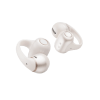

 Best for working out$undefined$249.00


What to look for in wireless earbuds
Prioritize fit over features
The right fit isn’t just about comfort. It also affects sound quality, active noise cancellation (ANC) and even microphone performance during calls. A pair of earbuds that doesn’t fit well won’t sound or perform the way it was designed to, no matter how much it costs.
“The biggest mistake is that people believe size is the only variable,” explains technology analyst Carolina Milanesi. “They don’t consider shape, so they think the three tips in the box will be enough to get them a perfect fit.”
If you’ve cycled through all three included tip sizes and nothing feels secure, that’s usually a sign to try a different shape of tip or a different style of earbud entirely, rather than just another size of the same one.
Decide whether you want in-ear or open-ear earbuds
Traditional in-ear earbuds create a seal inside your ear canal. That seal blocks outside noise, improves active noise cancellation and helps produce fuller bass.
Open-ear earbuds take a different approach, resting just outside your ear canal so you can hear your music while staying aware of traffic, conversations or other sounds around you. They’re a great option for runners, walkers and anyone who finds sealed earbuds uncomfortable.
“It’s a real fix for the seal problem because it removes the seal from the equation entirely,” says Milanesi. “Nothing goes into the canal, so canal shape stops mattering. But you’re trading one set of constraints for another, you lose isolation and you lose some bass.”
Levy sums up the whole tradeoff simply: “There’s no one device for everybody. You have to just try and go with comfort. Sometimes you have to sacrifice fit for sound quality, or sound quality for fit.”
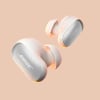
Best overall in-ear Bluetooth earbuds:


Sound quality: 5/5 | Microphone quality: 4.5/5 | Ease of setup: 5/5 | Battery life: 3.5/5 | Overall average score: 4.5/5
Why they won: These were the earbuds I reached for whenever I wanted to tune out the world and just enjoy my music. Whether I was working from home, taking a walk or listening to a podcast, they consistently sounded the best and blocked out more background noise than any other pair I tested.
Given how I feel about earbuds that sit deep in my ear canal, I went into testing expecting the Bose QC Ultra to be uncomfortable within an hour. Instead, they were the only sealed earbuds in this roundup that didn’t leave my ears feeling tired or overfull. Bose includes three ear tip sizes and three stability band sizes, which meant I could actually mix and match until I found a combination that sealed properly without making me feel cut off, something none of the others I tested offered to the same degree.
They stayed put through an hour-long gym session, too. As Levy told me, “Comfort is the best indicator of a good fit because everyone’s ear canals are different,” so having that many options to try increases your chances of finding the right fit, even if you’ve struggled with sealed earbuds before.
Battery life doesn’t last as long as some competitors, but that was easy to overlook because everything else felt so polished. Between the excellent sound quality, the industry-leading noise cancellation and the customizable fit, this was the best overall combination of sound and ease of use in this entire roundup.
Sound quality: These earbuds made everything I listened to sound bigger, richer and more immersive. Bass had plenty of punch without drowning out vocals, and I noticed details in familiar songs that I hadn’t heard with some of the less expensive earbuds. Quiet Mode was genuinely impressive. At the gym, I couldn’t hear the treadmill I was running on or the conversations around me, and a quick tap let me bring the outside world back whenever I needed it. One of my favorite listening modes was Immersive Audio. It made the music feel like it surrounded my head instead of coming from two tiny earbuds.
Microphone quality: Whether I was taking calls from home or walking outside in the neighborhood, people had no trouble hearing me. Bose’s SpeechClarity technology uses noise-rejecting mics to filter out background noise and wind, keeping my voice sounding natural. In especially noisy environments, my voice picked up a slightly processed quality, but conversations were still clear.
Ease of setup: Setup was quick and the Bose app made it easy to personalize the experience. I adjusted the EQ (equalizing settings to boost or reduce bass and treble to my liking), customized the touch controls and switched between listening modes with just a few taps. I also liked the built-in Fit Test, which confirmed I had the right ear tips for the best sound and noise cancellation.

Battery life: Battery life is the one compromise. Bose rates them for about six hours of listening per charge, compared with longer runtimes from models like the Beats Powerbeats Pro 2, Shokz OpenDots 2 and Soundcore P31i. The wireless charging case extends total listening time to about 24 hours, which is about average, and it’s a compromise I’d happily make for the outstanding sound and industry-leading noise cancellation.
Best overall open-ear Bluetooth earbuds:


Sound quality: 4.5/5 | Microphone quality: 4.5/5 | Ease of setup: 5/5 | Battery life: 4.5/5 | Overall average score: 4.63/5
Why they won: These are among the best-sounding and most comfortable open-ear earbuds I’ve tested. I expected to give up a lot of sound quality, but they delivered more bass and fuller sound than I thought possible from an open-ear design. As Milanesi told me, “Open-ear earbuds have improved dramatically. Unless you’re an audiophile, most people won’t notice as much of a difference as they expect.” After testing them, I’d agree.
They were also so comfortable that I often forgot I was wearing them. Because they let me stay aware of what was happening around me, I found myself reaching for them on neighborhood walks and while listening to podcasts and audiobooks around the house.
Sound quality: Open-ear earbuds have come a long way, and the OpenDots 2 are proof. Music sounded full and surprisingly dynamic, with more bass than I’d expect from earbuds that don’t sit inside your ear canal. They’re still not as immersive as traditional earbuds, especially in noisy places, but for everyday listening, I rarely felt like I was sacrificing much.
Microphone quality: Calls were consistently clear whether I was indoors or walking outside. People told me my voice sounded natural, and the earbuds did a good job keeping wind and background noise from becoming distracting.

Ease of setup: Setup couldn’t have been easier. The earbuds paired quickly, and the Shokz app lets you adjust EQ settings, controls and Dolby Audio preferences. The pinch controls are a real upgrade. Haptic feedback (a gentle vibration) confirmed each command, and I had far fewer accidental triggers than with touch controls on other earbuds. They’re secure enough for most workouts, though not quite as locked in as earbuds with over-ear hooks. I noticed only slight shifting during workouts.
Battery life: Battery life was excellent. I easily got through several days of casual listening before needing to recharge the case. The earbuds are rated for up to 10 hours per charge and 40 hours total with the charging case. Even better, a five-minute quick charge gave me about two hours of playback when I was in a hurry.
More Bluetooth earbuds, tested by the author
Best for iPhone users:

Sound quality: 4.5/5 | Microphone quality: 4.5/5 | Ease of setup: 5/5 | Battery life: 4/5 | Overall average score: 4.5/5
What to know: If you already use an iPhone, it’s hard to find a more seamless pair of earbuds than the AirPods Pro 3. Pairing is effortless, switching between Apple devices happens automatically and features like Live Translation, Siri and even head gestures for answering or declining calls all work together to make the experience feel polished.
The one caveat for me was fit. Apple has improved the design with a slightly smaller shape, redesigned ear tips and a new XXS tip size, which should help more people find a comfortable fit. Even so, my ear canals are small, and after about an hour they started to feel tight and heavy. Levy says that’s not unusual. “Many people assume a different size tip will solve the problem, but shape matters just as much as size.” If your ear canal is oval or curved, a standard silicone tip may never create a comfortable seal no matter which size you choose.
During exercise and whenever I squeezed the stems to use the controls, they gradually worked their way loose. That doesn’t take away from how good these earbuds are, but it reinforces that fit is highly personal. Even so, if AirPods fit your ears well and you’re already invested in Apple’s ecosystem, they’re an easy recommendation.

Sound quality: The AirPods Pro 3 delivered rich, balanced sound with plenty of detail across every genre I listened to. The improved active noise cancellation impressed me immediately. The moment I put them in, the world seemed to disappear. At the gym, the treadmill noise faded away, and while walking outside, traffic and engine noise became far less distracting. Even better, they didn’t create that plugged-up, sealed-off feeling I usually get with traditional in-ear earbuds.
Microphone quality: Call quality was consistently excellent. My voice came through naturally, and callers had no trouble understanding me. The microphones also did an excellent job minimizing wind and traffic noise, making conversations sound clear even when I was outdoors.
Ease of setup: This is where the AirPods Pro 3 really shine. Pairing took only seconds, and Apple’s ecosystem features worked exactly as expected. I appreciated the wide range of customization options, including Adaptive EQ, Live Translation and voice or head gestures for controlling calls and notifications. The squeeze and swipe controls generally worked well, although squeezing the stems sometimes caused the earbuds to shift slightly and loosen the seal.
Battery life: Battery life easily handled several days of casual listening. Apple rates the earbuds for about eight hours on one charge, with the charging case extending total listening time to about 24 hours. I rarely worried about running out of power during everyday use, and wireless charging made it easy to keep the case topped off.
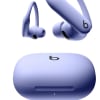
Best workout buds:


Sound quality: 4/5 | Microphone quality: 4.5/5 | Ease of setup: 5/5 | Battery life: 4.5/5 | Overall average score: 4.5/5
What to know: These were the earbuds I reached for every time I headed to the gym. The flexible over-ear hooks kept them securely in place whether I was on the treadmill or lifting weights and I never had to worry about them falling out. Even after an hour-long workout, they were still comfortable enough that I wasn’t in a hurry to take them off.
The sound was energetic and motivating, with plenty of bass to keep me moving, and the active noise cancellation helped tune out the distractions around me. Add in long battery life, a secure fit and seamless pairing with my iPhone, and these became an easy recommendation for anyone with an active lifestyle.

Sound quality: The Powerbeats Pro 2 have a fun, energetic sound that’s made for workouts. Bass gave my playlists plenty of punch without overwhelming vocals, and everything from upbeat pop to podcasts sounded clear and balanced.
Microphone quality: Calls were consistently clear indoors and outside, and callers had no trouble understanding me while I was walking. Background noise was well controlled, though very windy conditions occasionally crept into conversations.
Ease of setup: If you’re an iPhone user, setup is almost effortless. They paired instantly, and I could access battery status, listening modes and settings right from my phone. Android users get a dedicated app with one-touch pairing. The tactile physical buttons were also a welcome change from touch controls, making it easy to adjust the volume or skip tracks during a workout without accidentally pausing my music.
Battery life: Battery life is one of the Powerbeats Pro 2’s biggest strengths. With up to 10 hours of listening on one charge and up to 45 hours with the charging case, I rarely had to think about recharging them. Even if you forget, a quick five-minute charge gives you enough power to get through a workout.
Best value Bluetooth earbud:

Sound quality: 4/5 | Microphone quality: 4.5/5 | Ease of setup: 4/5 | Battery life: 5/5 | Overall average score: 4.38/5
What to know: For less than $40, I wasn’t expecting much, but the Soundcore P31i ended up being one of the biggest surprises in my testing. They sounded better than earbuds at this price have any right to, the adaptive noise cancellation was impressive and they delivered features I’d normally expect to find on much more expensive earbuds.
While I still prefer the comfort of open-ear earbuds for all-day wear, the P31i fit securely and stayed comfortable during my testing.
Sound quality: The sound was full and enjoyable, with surprisingly strong bass for such inexpensive earbuds. Music had plenty of energy without becoming muddy, and voices sounded natural whether I was listening to podcasts or taking calls. They don’t have the sound or polish of more premium earbuds, but for everyday music, podcasts, phone calls and commuting, they hold their own.
Microphone quality: Friends said my voice sounded clear during indoor and outdoor calls, and the microphones did a good job reducing everyday background noise. They’re not perfect in heavy wind, but for most conversations, they performed like earbuds that cost considerably more.

Ease of setup: Setup was quick and the Soundcore app gives you far more customization than I’d expect at this price. I could adjust the EQ, change touch controls and choose different listening modes. The touch controls occasionally required a second tap, but once I learned them, they became second nature.
Battery life: Battery life is outstanding. The combination of 10 hours on a single charge and 50 hours with the charging case make battery life the P31i’s best category. A quick charge also gave me over 3 hours of use when I forgot to plug them in before heading out.
Best budget earbuds:


Sound quality: 4.5/5 | Microphone quality: 3.5/5 | Ease of setup: 4.5/5 | Battery life: 4/5 | Overall average score: 4.13/5
What to know: These small, lightweight earbuds deliver surprisingly good sound for their price, backed by one of the best companion apps I tested.
If you’re looking for a reliable pair of affordable earbuds from a brand with a long history in audio, the Sony WF-C510 are an excellent choice. They’re the kind of earbuds you can toss in your bag every morning and not think twice about until you need them. They may not have active noise cancellation or every premium feature, but they delivered better sound than I expected, were incredibly lightweight and stayed comfortable throughout my testing. They’re proof that great everyday earbuds don’t have to cost $200.
I also appreciated their simplicity. Setup was quick, the controls were easy to learn, and the Sony Sound Connect app lets you fine-tune the sound to match your preferences. For everyday listening, they offer a lot without asking you to spend a lot.
Sound quality: The WF-C510 delivered clear, balanced sound that was a pleasant surprise at this price. Music sounded lively, voices were natural and podcasts were easy to follow. Sony has always made good audio a priority, and these earbuds prove you don’t have to buy the company’s premium models to enjoy it.
Microphone quality: Call quality was good enough for everyday conversations, especially indoors. People could understand me without difficulty, but in busier outdoor environments more background noise came through than with the higher-ranked earbuds in this roundup.
Ease of setup: The Sony Sound Connect app made it easy to pair and customize, adjust controls and switch Ambient Sound Mode on and off. The physical buttons were responsive and easier to use than touch controls when I wanted to make quick adjustments. These are extremely small and lightweight, which makes them comfortable for extended listening if you’re someone who does well with in-ear buds, though they did fall out during one gym session for me.
Battery life: Battery life, while solid for everyday use, is below average for this roundup. The earbuds are rated for up to 11 hours on a single charge, but the charging case adds only another 11 hours. You’ll need to pack the charger if you’re going away for a few days.Best style and design:


Sound quality: 4/5 | Microphone quality: 3.5/5 | Ease of setup: 4.5/5 | Battery life: 4.5/5 | Overall average score: 4.1/5
What to know: If you see your earbuds as part of your personal style, the Motorola Moto Buds 2 Plus Swarovski Edition are in a class of their own. They’re one of the few pairs I tested that looked just as good sitting on my desk as they did in my ears.
The Swarovski crystal accents — 12 on each earbud and 41 more on the case — set against the Pantone Violet Indigo finish make them feel more like a piece of jewelry than another plastic gadget. They’re sparkly without feeling over the top, and I found myself smiling every time I opened the charging case.
Thankfully, they’re more than just a pretty face. The earbuds delivered solid sound, effective active noise cancellation and all-day battery life that easily handled my everyday listening. While they don’t outperform the more premium models in this roundup, they strike a nice balance between style and performance.

Sound quality: The Moto Buds 2 Plus with Sound by Bose engineering produced clear, enjoyable sound with plenty of bass for pop, rock and podcasts. Voices sounded natural, and music stayed balanced even at higher volumes. They don’t have the richness or detail of some others I tested, but they deliver enjoyable, reliable sound for daily listening.
Microphone quality: Call quality was perfectly fine for everyday conversations. Friends could understand me clearly indoors, although busier outdoor environments introduced more background noise than some of the higher-ranked earbuds in this roundup.
Ease of setup: The Moto Buds Android app made it easy to customize EQ settings, controls and noise cancellation. I especially liked that I could personalize the sound without digging through complicated menus. The lack of an iOS app is a deterrent for most Apple users.
Battery life: Battery life easily lasted through several days of casual listening, even on days when I bounced between music, phone calls and podcasts. With up to nine hours of listening on a single charge and up to 40 hours with the charging case, I never found myself worrying about running out of power during the day.
Best budget active noise-canceling earbuds:

Sound quality: 4/5 | Microphone quality: 3.5/5 | Ease of setup: 4.5/5 | Battery life: 3.5/5 | Overall average score: 3.89/5
What to know: It’s rare to find active noise cancellation at this price, and that’s what makes the JLab Go Pop ANC stand out. They won’t compete with some of the more premium brands, but they do a good job reducing everyday distractions without stretching your budget. I also liked how compact they were. The tiny charging case easily slipped into my purse and the translucent purple finish gave them a fun personality — a nice change from the usual black or white earbuds. If your priority is getting ANC for under $30, these are an easy recommendation.
Sound quality: The Go Pop ANC delivered a fun, bass-forward sound that worked well for pop, hip-hop and podcasts. They’re not as detailed or balanced as the higher-ranked earbuds in this roundup, but they were enjoyable to listen to during everyday use and never sounded harsh. The JLab app offers a lot of unexpected features like EQ presets, Bass Boost, plus the ability to remap touch controls and adjust “Be Aware” settings.
Microphone quality: Call quality was good enough for casual conversations indoors and outside, Zoom calls or phone calls in spaces that aren’t too noisy. Voices came through clearly, though more background noise slipped through than with premium earbuds when I was in busier environments.
Ease of setup: Setup took just a few minutes, and the JLab app made it easy to switch EQ modes, customize the touch controls and adjust ANC settings. I appreciated having features that are often reserved for much more expensive earbuds at this price point.
Battery life: Battery life was more than solid for earbuds in this price range. I easily made it through several days of casual listening before reaching for the charging cable. The earbuds are rated for up to seven hours on a single charge, and the charging case extends total listening time to about 24 hours.

Best for casual listening:

Sound quality: 3.5/5 | Microphone quality: 3.5/5 | Ease of setup: 4/5 | Battery life: 4/5 | Overall average score: 3.8/5
What to know: If you’re shopping on a tight budget and mostly listen to music, podcasts or take the occasional phone call, you’ll understand why the Tagry X08 have become a popular choice among Amazon shoppers. After testing them myself, I can see the appeal. They paired quickly, felt secure and offered several thoughtful touches, including an LED battery display on the charging case that made it easy to see exactly how much power was left. While they don’t match the sound quality or refinement of the higher-ranked earbuds in this roundup, they’re a solid choice for casual listeners who want dependable performance at an affordable price.

Sound quality: These get the job done for commuting, podcasts and casual music, though they lack the clarity, detail and balance of some of the other models I tested. Bass had enough punch for pop, and vocals stayed clear on podcasts and calls, but more complex tracks lost some of the separation I heard from other options in this roundup.
Microphone quality: Call quality was good enough for everyday conversations indoors and outside. My voice came through clearly, although more background noise was noticeable in busier environments than with the premium models.
Ease of setup: Pairing took just a few minutes, and the earbuds reconnected reliably every time I took them out of the case. There isn’t a companion app for customizing the EQ or touch controls. If you prefer earbuds that simply connect and play without any of the extra stuff, their straightforward approach is actually part of the appeal.
Battery life: Battery life was one of Tagry’s strongest features. I never had to recharge the case since it extends total listening time to as much as 60 hours. One feature I especially appreciated was the LED display on the front of the case, which showed the remaining battery percentage and the charging status of each earbud at a glance, so I always knew how much power I had left.
Frequently asked questions
“The tips are round, and many canals are not,” Milanesi explains. “A silicone dome seals by pressing evenly against the canal wall — if your canal is oval or bends, the dome only contacts two points and leaves a gap at the others. Going up a size just jams the same wrong shape in harder.”
If that sounds familiar, it may be worth trying foam tips instead of silicone (when possible), since foam expands to fill whatever shape it lands in rather than forcing your canal to match the tip.
Levy calls it the occlusion effect. “If you put a closed earmold in somebody’s ear, they often report an echo, because everything is closed. There’s no opening, so all the sound is going in with nowhere to bleed out. That’s what makes it feel like an echo, and it’s much louder than it would otherwise be.”
She adds that some people also feel pressure, especially if they already have some hearing loss, since background noise gets amplified along with everything else.
According to Levy, it comes down to comfort, full stop. “You just go by comfort. Comfort, fit and how you’re using them every day.” If it never stops feeling uncomfortable, that’s your answer.
It depends on how and where you listen. Traditional in-ear earbuds create a seal inside your ear canal, which improves bass and active noise cancellation. Open-ear earbuds leave your ear canal uncovered, allowing you to hear traffic, conversations and other sounds around you, making them a good choice for walking, running or anyone who finds sealed earbuds uncomfortable.
Open-ear earbuds have improved dramatically over the past few years, but they still involve some compromise. “There is definitely a gap, but it’s narrower than it was three years ago,” says Milanesi.
Most listeners will notice less bass and a little less detail in quiet environments, but for podcasts, phone calls and everyday listening, many people quickly adapt.
It’s a matter of physics. “Bass needs air pressure to build against your eardrum, and a sealed tip creates the closed chamber that lets that happen,” explains Milanesi. Because open-ear earbuds don’t create that seal, some low-frequency sound naturally escapes before it reaches your ear.
Not necessarily. Better sound quality and more advanced features don’t matter if the earbuds aren’t comfortable enough to wear. The best earbuds are the ones that fit well, sound good to you and suit the way you actually listen.
How we tested Bluetooth earbuds
I tested nine pairs of wireless earbuds over several weeks of everyday use, living with each pair for several days and evaluating them in the following four categories on a scale of 1-5 (1 being the worst, 5 being the best):
Sound quality: I listened to a mix of music, podcasts and audiobooks at home, on neighborhood walks and at the gym, paying attention to bass response, vocal clarity and how well each pair handled more complex tracks. For earbuds with active noise cancellation and transparency modes, I also evaluated how well they blocked or let in outside sound.
Microphone quality: I made and received calls indoors and outdoors, including on windy days and in noisy environments like busy streets and even the New York City subway, to see how well each pair isolated my voice from background noise. Whenever possible, I asked the person on the other end of the call to describe how I sounded.
Ease of use: I paired the earbuds with both iPhone and Android devices whenever supported, tested companion apps for features like EQ adjustments and control customization and evaluated how intuitive the controls were. I also wore each pair for extended periods, including during workouts, to judge long-term comfort and fit.
Battery life: I compared my real-world listening time with the manufacturer’s claims and noted charging case performance and quick-charge features when available.
Why trust Shop TODAY?
Andrea Smith is an award-winning technology reporter, producer and Shop TODAY contributor with more than 20 years of experience in the tech space. She has previously tested portable Bluetooth speakers for Shop TODAY’s Ranked series.
Meet our experts
- Louise Levy, MS, CCC-A is an audiologist and the owner of Carnegie Hill Audiology in New York City.
- Carolina Milanesi is the president and principal analyst at Creative Strategies, a technology advising company.

