

The right shoe width is important in order to avoid certain foot pain and long-lasting foot problems. If you've been experiencing foot pain, the solution might be in changing your shoe width. Wearing ill-fitting shoes when it comes to width can be detrimental for your feet — especially if you’re someone who does a lot of walking.
Wearing shoes designed specifically for walking is beneficial for overall foot health, and it can help alleviate pain (since shoes that don’t fit properly can cause an array of issues). According to the American Academy of Podiatric Sports Medicine, the ideal walking shoes are lightweight, roomy and stable.
Sure, this criteria sounds simple to follow — but things get a bit trickier when you add shoe width into the equation. Those with wide feet have a few more steps to take (no pun intended) while shopping for walking shoes.
To help you find the best walking shoes for wide feet, we consulted with medical experts to determine the walking shoes they recommend. We also included a few editor favorites to make the list as transparent as possible.
 Best slip-on sneakers$undefined$85.00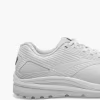


Best walking shoes for wide feet, according to experts and editors


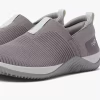
Writer Jannely Espinal has owned this pair for almost two years, and she says these are her go-to for running errands and walking around the neighborhood. "I like how easy these are to slip on, especially when you're in a rush and need to head out. The upper is made from a knit fabric that feels breathable and stretches out even when wearing thicker socks. I also have worn them for longer walks, and they keep my arches comfy at all times," says Espinal.

Deputy managing editor Jess Bender owns this pair and says they are the best for long-distance walking. "It’s rare for me to find a sneaker that I don’t have to break in, but these kicks delivered supportive strides almost immediately. While I can rave about their arch support for ages, the wider toe box and deep heel cup minimize any discomfort I might feel after hours on my feet. While they're seen better days after a year plus of wearing them, they remain nearly as comfortable as they were the first time I put them on," adds Bender.


Dr. David Myer, MD, an orthopedic surgeon at OrthoIndy, says Skechers and Altras are two brands you may want to add to your radar.
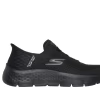
These lightweight slip-on Skechers, which were seemingly designed for ultimate comfort while walking, are designed with memory-foam insoles with a built-in heel (aka the brand’s Heel Pillow). These shoes are also made with stretchy, yet snug laces that hug your feet with every step.

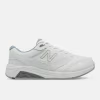
Priya Parthasarathy, a podiatrist and president of the Maryland Podiatric Medical Association, previously recommended these shoes from New Balance as a good option for those who overpronate, but she shared that they're also good for people with wide feet.
“They provide stability for flat feet and come in numerous different widths," she shared. "A lot of people wear these casually in numerous different ages. The 860s have a reliable medial post support and [are] good for wider feet.”

Dr. Landon Uetz, a physical therapist (PT, DPT) at TeachMe.To previously shared that these sneakers are good for people with wide feet. “These shoes offer various width sizes to accommodate all foot types. I’ve tried both their classic fit and regular width. As someone with wider feet, I’ve found the regular width fits well without needing to opt for a wide shoe, which I often need with other brands. The Ghost also provides more cushioning compared to more rigid options, aiding in shock absorption and effectively distributing forces. It’s an excellent choice for those seeking a supportive shoe.”
Senior social media editor Kate McCarthy has been wearing these sneakers for years, and while she's worn them for many runs and even marathons, she also wears them for walks.


Parthasarathy also recommends Brooks’ Glycerin sneakers because of their “very reliable balanced cushions.” Espinal owns this pair, and she even ran the New York City Marathon in them. “On race day, I decided to slip on these kicks because I just rely on their overall construction. They are wide, supportive and won’t let you down after miles. While I add an additional pair of insoles for extra support, these shoes have been the most reliable I’ve had. The outsole won’t let you slip, and it reduces my overpronation,” adds Espinal.


"This is a great daily trainer and introduction to the Hoka brand," shares Kaleigh Ray, a certified personal trainer and athletic footwear expert. "It comes in a wide range of sizes and colors.”
Multiple staffers on our team are fans of the style, including writer Emma Stessman. "Not only are they incredibly cushioned and comfortable, making them great for standing all day or long walks, but they also have a pretty wide base to begin with and come in wide sizes to accommodate different foot types."


Dr. Jeffrey T. Biever, a podiatrist at South Bend Orthopaedics in South Bend, Indiana, says that Brooks (along with Hoka sneakers), “are two other types of walking shoe[s] which can accommodate most types of feet.”
The sentiment is true: These Brooks are not only available in wide sizes, but also extra-wide sizes to accommodate a variety of foot shapes. In addition to their roomy, supportive design, these have comfortable cushioned insoles.

“Hoka shoes are great shoes for walking or running,” says Myer. “They have softer upper materials and tend to be well cushioned, in addition to being supportive, stiff and with a mild rocker bottom which can help,” he adds.
Amanda Fama, a former editor at Shop TODAY, has a pair of wide Hoka sneakers — and she does a lot of walking in them. “I live in New York City and find myself walking pretty much everywhere. Whether I’m walking to the store in my Hokas or taking a stroll through the park, I know my feet are going to be comfortable. I’ve always had wide feet, and these sneakers provide enough room without feeling too loose.”


“New Balance is a very good walking shoe because they have sizes to accommodate wide feet,” says Biever. These New Balance sneakers in particular are available in wide, extra-wide and extra-extra-wide sizes, making them an extremely customizable pick. These are also offered with hook-and-loop closures (instead of laces), making them a bit more accommodating than most pairs on the list.

Here’s another pair Espinal has worn consistently for the past four months for its sturdy outsole and spacious interior. “I love how retro and chic these sneakers look with anything I wear. The sturdy outsole and cushioned interior make these a top choice whenever I’m planning to walk for miles,” she says. It combines technicality, comfort and an edgy design to keep you steady yet fashionable.
Another alternative to this style is an iteration of the ProGrid model: the ProGrid Paramount. This style features an Arch-lock medial support on the forefoot to make walks more stable.

How do I know if I have wide feet?
After having walked several miles in your own shoes for your entire life, you would think your answer to the question of “Is my foot wide?” would be a no-brainer. But according to the experts, it’s more of a thinker question than you may realize.
“I feel most people are not aware of having wider feet until they encounter some form of issue with their feet,” says Biever.
“When individuals try to wear a narrow type of shoe and they find them very uncomfortable, this is usually a telltale sign that one has a wider type of foot,” adds Biever.
According to Myer, another good way to solve this mystery is to give your foot the “old-school” treatment (aka a shoe fitting at the store). “Generally, the only way someone can tell if their feet are wide is during shoe wear/fitting,” says Myer.
“There is no hard cutoff as to what constitutes a wide foot and what is not. The old-school shoe measuring device that we all remember from being fit for shoes in childhood is a good first step in determining both shoe size, and if a special ‘width’ size may be needed,” he adds.
What to look for in walking shoes for wide feet
“People with wide feet should consider a stiffer, supportive midsole type of shoe gear,” recommends Biever. “Also, a wider toe box is important to prevent friction and skin breakdown,” adds Biever.
In addition to support, it’s important to be on the lookout for comfort, recommends Myer.
“The most important thing in considering a walking shoe, or any shoe, is comfort,” suggests Dr. Myer. “Trying the shoe on and trying to simulate the normal activities you would be doing is helpful,” adds Myer.
Myer also advises to “ensure you are purchasing shoes that fit the shape of your foot.” He continues, “There are multiple different kinds of foot shapes, so you need to be sure the shoes you purchase meet the needs of your foot. A ‘wide’ shoe may be good for the front of the foot, but be too wide in the heel, so it becomes loose in the back,” he continues.
“It is, unfortunately, a bit of a ‘goldilocks’ method of finding the right shoe: too wide, too narrow, just right,” adds Myer.
“A good resource for patients is www.footcaremd.org, which is the American Orthopedic Foot and Ankle Society (AOFAS), which can help with education and finding a provider for all things foot and ankle,” adds Myer.
The benefits of walking shoes for wide feet
“Walking shoes designed for wide feet are different from standard walking shoes because they usually have a certain amount of room for the foot and also have a type of softer fabric to prevent skin breakdown, such as blistering,” says Biever.
“Individuals with wider feet are more prone to have bony prominences — especially to the forefoot area, which is why walking shoes with a wider toe box are so important,” he adds.
Frequently Asked Questions
“If the shoe you wear is too narrow, it will cause discomfort and pain when walking or wearing for long periods of time,” says Myer.
“Specifically, it can rub and cause corns or calluses, and in extreme cases, even foot ulcers. If you wear too narrow of a shoe in the front of the foot, it can lead to the development or progression of forefoot deformities such as bunions, bunionettes (also known as tailors' bunions) and hammertoes,” adds Myer.
For me, wide feet were an exciting discovery that came with my pregnancy — but experts tell us that the causes can range.
“People who have wide feet can come from several factors,” says Biever. “Genetics is the most common. Individuals who have flat feet usually have a wider foot type as well. Ligamentous laxity and other biomechanical factors can be causes of people having wide feet.”
“Other causes of ‘wide’ feet actually aren’t wide feet, but differently shaped feet,” says Myer. “Things that can affect foot shape include bunions, hammertoes, tailor’s bunions or acquired flatfoot deformity. Post-traumatic changes after sprains/fractures can lead to bony enlargement or scar tissue or deformity; all can change the shape of the foot."
How we chose
Shop TODAY gathered insight from experts in the field on best practices and personal recommendations when it comes to walking shoes for wide feet. We also took into consideration information provided by verified purchasers of products recommended.
Meet the experts
At Shop TODAY, our reporters interview a range of qualified sources and experts to capture a wide scope of perspectives on a given topic. We also make sure that all expert guidance and recommendations are made independently and with no undisclosed financial conflicts of interest.
- Dr. Jeffrey T. Biever DPM of South Bend Orthopaedics in South Bend, Indiana, is a board-certified physician specializing in numerous foot and ankle conditions.
- David Myer, MD of OrthoIndy in Indianapolis, Indiana, is an Orthopedic Surgeon and Fellow trained in foot and ankle surgery.
- Kaleigh Ray is a certified personal trainer and athletic footwear expert.
- Dr. Landon Uetz (PT, DPT) is a physical therapist at TeachMe.To.
- Dr. Priya Parthasarathy, DPM, is a partner at the Foot & Ankle Specialists of the Mid-Atlantic. She is the president of the Maryland Podiatric Medical Associations Executive committee and previously served on the board of directors of the American Board of Podiatric Medicine.

Illy Whole Bean Coffee Classico (Medium Roast)

Illy Whole Bean Coffee Classico (Medium Roast)
