


We all know the feeling: We haven't had enough R&R, and we don't want our faces to betray how tired we are. Sure, a vacation sounds nice, but it won't solve all our eye care woes. In addition to tired eyes, most of us reach for eye creams due to a combination of afflictions, such as allergies, sun damage, volume loss and dry skin.
"Luckily, many eye creams include a combination of ingredients to address more than one concern," says Merry Thornton, a board-certified physician assistant and founder of Element Medical Aesthetics. You just have to know which key ingredients to look for.
To keep our eyes looking photo-ready, we asked Thornton and other estheticians, oculoplastic surgeons and plastic surgeons about the best eye creams for dark circles, puffiness and wrinkles. The best part? You won't have to travel too far to find them because they're available at your local drugstore (and Amazon!).
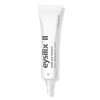 Works well under makeup$undefined$13.99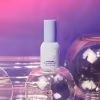
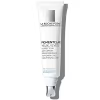 Best for dark circles$undefined$44.99


Do drugstore eye creams actually work?
It’s a resounding “Yes!” from our experts. Eye creams are specifically designed for the thinnest, most delicate skin on our bodies. They have a smaller molecular weight, which means they can penetrate the skin more easily, explains Rachel Lee Lozina, esthetician and owner of Blue Water Spa.
Eye creams are also typically more hydrating than other types of creams since the skin around our eyes is prone to drying out.
The best drugstore eye creams, according to experts and editors
Brightens and hydrates:

It comes as no surprise that Dr. Kami Parsa, a Beverly Hills-based oculoplastic surgeon, recommends this top-rated fragrance-free formula from CeraVe. With active ingredients that hydrate and brighten the skin, it’s a cost-effective product that’s great for those with sensitivities.
If you have dry under eyes:

My [San Miguel] skin is very dry, but can feel more 'tight' and uncomfortable around my under eyes. I love ceramides and lipids in my facial moisturizers, since they're most effective at strengthening the skin barrier, so I apply this concept for my eye cream. The Byoma Barrier+ Eye Cream is one of my favorite treatments for soothing any dryness. I don't find it very heavy or greasy — plus, the packaging is too cute!
Works well under makeup:


Looking for an eye cream that doesn't settle? Associate editor Lauren Witonsky recommended this pick as a remedy for dark under eye circles.
“I use a pea-sized drop every night before bed and it’s lasted me a long time, but it also sits well under makeup during the day," she raved. "I can’t say I’ve noticed any reduction in under-eye puffiness, but I do think it helps prevent makeup from settling in fine lines and the brand says it targets dark circles too.”
An award-winning pick:


We rated Bubble's Star Dew Hydrating Eye Cream the 'best value eye cream' in our most recent Beauty Awards for its effectiveness at brightening and hydrating the under eyes, especially for those with sensitive skin. For just $14, we consider it a steal for all that it offers.
Best for dark spots:

Recommended by Parsa and Dr. John Paul Tutela, a board-certified plastic surgeon in New York and New Jersey, this is a must-try. Retinol helps organize the collagen in your skin to reduce fine lines and uneven texture while other ingredients help fade dark spots. “It overall targets everything," says Parsa. “Just give it about four weeks to start seeing results,” adds Tutela.
No more fine lines:

Lozina raves that she’s currently loving the effects of Baebody’s eye gel. Its ingredients are all great for tightening the skin, rebuilding collagen and elastin and helping to reduce fine lines and wrinkles. “I love that it’s a non-irritating formula, dermatologist tested and hypoallergenic,” she adds.
Hello firmness:

Dry, flaky under eyes? Not anymore. "When I need extra love around the eyes, this shea butter-based eye cream gives long-lasting hydration," says one of our experts. "The added peptides give extra firmness and if you keep this in the refrigerator, you’ll also diminish under-eye puffiness."
Great for overnight:


This nighttime option from Olay contains ingredients that make miracles happen almost overnight, namely retinol to stimulate cell turnover and peptides to promote collagen production.
Thornton says that while retinol is a powerful tool for reducing fine lines and wrinkles, you should save it for your PM skin care routine. “Retinol can make you more sensitive to the sun,” she explains. “And eye creams with reparative ingredients such as peptides work better when we are sleeping.”
Best for dark circles:

When it comes to finding an eye cream specifically for dark circles, Dr. Brooke Jeffy, M.D., a board-certified dermatologist in Scottsdale, Arizona, looks no further at this pick from La Roche-Posay.
She previously recommended the product in our eye creams for dark circles coverage and praised it for its application and key ingredients, caffeine and retinol, which are two powerful ingredients for brightening and awakening the under eyes.
What should you look for in an eye cream?
If you feel that the area around your eyes is the most susceptible to skin care concerns, you’re not alone. Thornton explains that the delicate skin around our eyes is thinner, has fewer oil glands and is more prone to damage than other areas on our face. That’s why it’s important to use an eye cream specifically designed for this area.
But eye creams aren’t all made the same. Here are four factors to consider.
Key ingredients
Our experts say reading the ingredient list is the most important factor when considering an eye cream.
- Hyaluronic acid: Attracts water and helps to plump the skin, reducing the appearance of fine lines and wrinkles.
- Retinol: Speeds up cell turnover. In other words, it helps to reduce the appearance of wrinkles. While a popular and effective ingredient, it can be irritating for sensitive or dry skin. Because it can make skin more sun-sensitive, formulas with retinol should only be used at night.
- Antioxidants: Vitamin C helps brighten the skin, boost collagen production and help protect the skin from damage caused by free radicals (unstable molecules that can damage cells and lead to premature aging and unsightly dark spots).
- Niacinamide: Helps to brighten the skin, reduce the appearance of pores and reduces the appearance of fine lines and wrinkles.
- Caffeine: Reduces puffiness and dark circles under the eyes.
- Peptides and growth factors: Stimulates collagen production, plumping the under eye for a fuller, more youthful appearance.
- Ceramides: An emollient that helps to lock in moisture and protect the skin from damage.
Ingredients to avoid
For those with sensitive skin, Lozina recommends avoiding eye creams containing alcohol, retinoids, sodium lauryl sulfate, fragrances, dyes and exfoliants.
Skin concerns
Lozina said to take your specific skin concerns into consideration when choosing an eye cream. If you have oily skin, avoid eye creams that are oil-based or petroleum-based. Wax-based eye creams, like those with carnauba wax, can cause breakouts. “If you have dry skin, look for eye creams that have some oil, hyaluronic acid and peptides. These ingredients will help to hydrate your skin and stimulate collagen and elastin production,” she says.
Formula
Eye creams come in a few formulas, including cream, gel and serum. The formulation you choose will depend on your preferences and your skin type, according to Lozina. For example, some people avoid heavy eye creams because they may interfere with makeup. However, no matter the formula you choose, it will deliver targeted results when made with the right ingredients for your concerns.
What eye creams can’t do
Many eye creams promise to do everything from reduce wrinkles to brighten the eye area. But don’t take their claims at face value, mentions cosmetic physician Dr. Vivian Chin, MD, MPH.
It’s important to look for ingredients that have been clinically proven to be effective for the specific concerns you’re trying to address. “Eye creams are the most purchased but also the most returned skin care item across the skin care industry,” she notes.
Thornton adds that eye creams don’t replace proper sun protection, a healthy diet and plenty of hydration. For a dewy, healthy look, she recommends consuming at least 64 ounces of water a day.
Frequently asked questions
You can, but you might not want to. Applying eye cream directly to the eyelids could cause irritation to the skin and eyes. Instead, apply eye cream to the orbital bone around your eye. “It will naturally migrate to your lids,” explains Lozina.
If you’re on a budget, our experts say you can use a gentle face cream under your eyes. But Chin cautions against using a regular-strength retinol face cream anywhere near your eyes. “It would likely be too strong and face creams with a lot of fragrance may also irritate the eye area,” she says.
Using eye cream on the face is less of a concern, but it’s still not ideal. Eye creams are often more expensive than face creams. “They also have a lower concentration of active ingredients,” adds Chin.
Apply eye cream to the orbital bone around your eye rather than your eyelids or the skin directly next to your eyes. When Thornton applies her eye cream, she starts by placing small dots of the cream under her eyes, down to the cheekbone, to the sides of the eyes, and then just below the brow bone. Gently using the ring finger, use light pressure to gently spread the product, avoiding the eyes and any tugging of the skin.
Our experts recommend applying the thinnest consistency products first and layer the thicker ones on top. Depending on your skin care routine, this might look like: Toner, eye cream or serum, moisturizer, then sunscreen.
How we chose
At Shop TODAY, our reporters interview a range of qualified sources and experts to capture a wide scope of perspectives on the topic. We also make sure that all expert guidance and recommendations are made independently and with no undisclosed financial conflicts of interest. To find the best drugstore eye creams, we relied on expert recommendations and editor-tried and reviewed products.
Meet our experts
- Dr. Kami Parsa, MD, is a Beverly Hills-based oculoplastic and reconstructive surgeon. He specializes exclusively in surgical and non-surgical procedures for the eyelids and the area around the eyes.
- Dr. Vivian Chin, MD, MPH, is a cosmetic physician and founder of Koru Wellness & Aesthetics NYC. She is a member of the American Medical Association, American Society of Cosmetic Physicians, American Academy of Aesthetic Medicine, American Society for Laser Medicine and Surgery and American Medical Spa Association.
- Dr. John Paul Tutela, MD, is a board-certified plastic surgeon with offices in New York City and Livingston, New Jersey.
- Rachel Lee Lozin is an esthetician and owner of Blue Water Spa in Oyster Bay, New York.
- Merry Thornton, PA-C, is a New York, New Jersey and Connecticut board-certified physician assistant and founder of Element Medical Aesthetics in New Canaan, CT.
- Dr. Brooke Jeffy, M.D., is a board-certified dermatologist in Scottsdale, Arizona and founder of youth skin care brand, BTWN.

