

In the ever-growing encyclopedia of skin care ingredients, retinol ranks pretty highly among its superhero peers.
You’ve likely heard that retinol is a powerful ingredient with impressive anti-aging abilities, but you probably have a few questions about the skin care miracle worker. For instance, when should you start using a retinol and what side effects should you expect when you do?
Whether you’re just starting your retinol journey or you’re looking to shake up your beauty cabinet and try a new product, you’ve come to the right place.
Shop TODAY consulted a range of skin care pros to find out everything you need to know about retinol. They’re also sharing their recommendations for drugstore retinols you’ll want to add to your shopping list. We also rounded out the list with a Shop TODAY Beauty Award-winning retinol as well.
 Tried-and-true expert pick$undefined$31.95
 Dermatologist favorite$undefined$24.97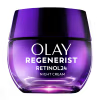


What to look for while shopping for retinol
Before investing in a new retinol product, it helps to come prepared with a shopping checklist. Here are some tips from the pros:
- Retinol concentration: “Start with a lower concentration if you’re new to retinol, and gradually increase the strength as your skin builds tolerance," Dr. Robert Anolik, a fellow of the American Academy of Dermatology, says.
- Active ingredients: “Look for retinol as the active ingredient,” board-certified dermatologist and owner of Radiant Dermatology Associates, Dr. Dara Spearman, says. “You can also consider retinol palmitate, which is a milder, less potent form of retinol.”
- Hydrating ingredients: “Look at the other ingredients to see if it has good moisturizers like hyaluronic acid or glycerin. Some of them have cocoa butter,” Dr. Debra Jaliman, board-certified dermatologist and author of the book, “Skin Rules: Trade Secrets from a Top New York Dermatologist,” says. "If you’re acne-prone, you would want to avoid cocoa butter because it could block the pores."
- Soothing ingredients: “Look for a formulation that has ingredients that will also soothe skin like glycerin, hyaluronic acid and argan oil. This will help get skin used to the retinol without significant side effects like dryness and irritation,” Spearman says.
Best drugstore retinol products, according to experts and tested by editors


“What started out as an Rx product is now available over the counter at a really good price. It’s gentler than some of the more non-specific receptor retinoids,” Boston-based dermatologist Ranella Hirsch says.
Per the brand, the budget-friendly product treats and fends off acne with prescription strength. Along the way, it improves skin tone and texture and alleviates redness and swelling.

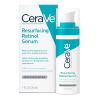
Dr. Angela Lamb, MD, a board-certified dermatologist and the Director of the Westside Mount Sinai Dermatology Practice, swears by this affordable serum for acne-prone skin.
“It uses encapsulated retinol for slow release, minimizing irritation, and includes ceramides and niacinamide to support the skin barrier,” she says.
Lamb raves about its ability to tackle acne scars and hyperpigmentation and recommends using a moisturizer with the serum to reduce dryness.


Jaliman is fond of this “lightweight” and “non-greasy” serum that’s formulated with arophira, a retinol alternative.
“It contains an encapsulated retinol, so it’s not irritating to the skin. It can even be used on oily skin,” she notes.
Per the brand, the serum addresses uneven texture and tone and assists with collagen production. As an added bonus, it controls excess production of sebum.

Retinol doesn’t have to be harsh to be effective. Jaliman loves this one that’s formulated with an encapsulated retinol, making it “very gentle.”
“It also contains vitamin C, so it helps even skin color,” the dermatologist says.

Looking for quick results? Spearman is a fan of this retinol oil.
“It’s hydrating so it helps prevent dryness and irritation, but not greasy and it absorbs quickly into skin,” the skin pro says. “I also love that the smell isn’t too overpowering!”
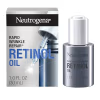
Wrinkles don’t stand a chance against this serum from Neutrogena, a tried and true drugstore brand. The product multitasks to handle dryness, dullness, dark spots, fine lines and wrinkles simultaneously.
Lamb is also a fan of Neutrogena Rapid Wrinkle Repair Retinol Serum, a similar product from the brand, and says it “targets fine lines, wrinkles and texture quickly.” The skin pro recommends using it every other night initially.

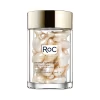
Hirsch describes this product as one of her “all-time favorite retinols.”
“It works really well, you can find it anywhere and the vast majority of folks tolerate it well,” she says.
The unique packaging features individual capsules that are chockful of retinol and antioxidants to give skin a boost overnight and target the signs of aging, like fine lines.
Hirsch is particularly fond of the fact that you can easily pack the capsules for travel and says the packaging “removes so much of the issue of folks overdoing it.”


Hoping to tackle fine lines, uneven texture and dull skin all at once? Lamb recommends this multitasking wonder.
“It contains retinol and retinyl propionate (gentler but effective), plus niacinamide for hydration,” she explains.
The skin savant suggests using it two to three times a week at night initially then gradually increasing once your skin builds up a tolerance.


This buzzy skin care product was a Shop TODAY Beauty Awards 2024 winner for best overall anti-aging moisturizer. Suitable for sensitive skin, this fragrance-free moisturizer is formulated with pro-retinol, hyaluronic acid and vitamin C and helps reduce wrinkles.

“Marketed as an acne treatment, adapalene gel is a retinoid, not a retinol. This means it does not need to undergo the same types of enzymatic conversions as retinol, and is therefore a stronger product,” Camp says.

Dr. Brendan Camp, a double board-certified dermatologist of MDCS Dermatology, suggests adding this budget-friendly night concentrate to your anti-aging routine.
“This retinol treatment contains bisabolol, a plant-based extract to calm skin, and peptides to encourage collagen production,” he notes.
What is retinol and why is it important?
Put simply, retinol is a form of vitamin A that can be found in many anti-aging products.
“It’s known for its ability to promote skin renewal and improve skin texture. Retinol works by increasing the turnover of skin cells, which helps to reduce fine lines, wrinkles and age spots. It also helps to unclog pores, making it effective for treating acne,” Anolik says.
Once incorporated into your skin care routine, retinol can usher in “brighter, smoother and more youthful-looking skin,” per the skin care pro.
“It does all this via biological mechanisms. Once inside the cell, retinol is converted to retinal and then to retinoic acid. This conversion is crucial because retinoic acid is the active form that interacts with cellular receptors. These receptors influence gene expression and cellular response,” Anolik says.
Frequently asked questions
Each person’s complexion is unique, but as a general rule, it’s best to incorporate retinol early on in adulthood if you’re looking to take advantage of the ingredient’s anti-aging properties.
“Retinol can be used by those in their twenties and thirties as part of a skin care routine aimed at prejuvenation, or using specific skin care products to limit or slow the appearance of fine lines and wrinkles,” Camp says.
Of course, there are exceptions to every rule and Anolik notes that retinol can sometimes be beneficial for younger people with acne or uneven skin tone.
Per Spearman, retinol is most “effective and essential” in your mid thirties to forties “before permanent visible damage is noticeable and before more invasive treatments are needed.”
As you graduate to more mature skin, retinol can come in especially handy since it boosts collagen.
“Retinols can be used by those with mature skin to help address the effects of aging and sun damage, such as skin blemishes, texture changes and dark spots,” Camp says.
Before adding any ingredient to your skin care routine, it’s best to consider any potential side effects.
“Common side effects of retinol include dryness, irritation, redness and peeling. These usually subside as your skin adjusts to the product. To minimize these effects, start by using retinol every other night or every third night, and gradually increase the frequency,” Anolik notes.
Luckily, there are a few ways to minimize these side effects and others, including itching and burning.
“I recommend patients start using retinol slowly, meaning once every three nights for about one month. This allows time for your skin to adjust to the effects of retinol. After that, you can increase the frequency of use as tolerated. It helps to apply a moisturizer after using a retinol to reduce the risk of side effects,” Camp says.
One thing to note is that retinol makes skin more sensitive to sunlight, so it’s best to apply it and night and make sure to wear a sunscreen during the day.
In general, retinol can be used by most skin types, but anyone with dry, sensitive or eczema-prone skin should use the ingredient with extra care, per Camp.
How do you add Shop TODAY as a Preferred Source on Google?
Google’s new Preferred Sources feature allows users to manually select their favorite publishers and news outlets for a more customizable experience tailored directly to the reader. Once you’ve opted to receive our content, you’ll begin seeing more of our recent and trending articles displayed within your Top Stories news feed.
The easiest way to add us as a preferred source is to click here and type in “TODAY.com.” Once the box is checked and you’ve refreshed the page, Shop TODAY content will start appearing in your feed.
How we chose
The Shop TODAY team rounded up the best retinol products for your 30s by enlisting the recommendations of two board-certified dermatologists. We also asked our editors in their 30s to share a few tried-and-true favorite products as well, specifically focusing on retinols that contain hydrating ingredients and cater to a variety of skin types.
Meet the experts
At Shop TODAY, our reporters interview a range of qualified sources and experts to capture a wide scope of perspectives on drugstore retinol products. We also make sure that all expert guidance and recommendations are made independently and with no undisclosed financial conflicts of interest.
- Dr. Robert Anolik, MD, is a board-certified dermatologist and a fellow of the American Academy of Dermatology. He specializes in cosmetic dermatology and laser skin surgery.
- Dr. Brendan Camp is a double board-certified dermatologist at MDCS Dermatology.
- Dr. Ranella Hirsch is a Boston-based dermatologist and the co-Founder of Atolla, an Allure Beauty Breakthrough.
- Dr. Debra Jaliman is a board-certified dermatologist and author of the book “Skin Rules: Trade Secrets from a Top New York Dermatologist.”
- Dr. Angela Lamb, MD, is a board-certified dermatologist and the Director of the Westside Mount Sinai Dermatology Practice, as well as an associate professor of dermatology.
- Dr. Dara Spearman is a board-certified dermatologist and owner of Radiant Dermatology Associates.


