

If you’ve heard about heated eye masks but are still questioning what they actually are, what they do and if they’re right for you (and your eyes), you’ve landed on the right page.
To put it simply, “A heated eye mask is a therapeutic device designed to deliver controlled warmth to the eyelids, eyelid margins, and surrounding area,” explains Dr. Alison Early, a board-certified ophthalmologist and cataract and refractive surgeon based in Cincinnati, Ohio. “These masks are often used as part of a treatment protocol for dry eye disease, meibomian gland dysfunction (MGD) and blepharitis, and a variety of heating mechanisms are available, both disposable and reusable.”
Shop TODAY tapped several board-certified dermatologists and ophthalmologists to learn about heated eye masks, their benefits, safety precautions and how often you should be using them. The experts also shared recommendations for the models that get their seal of approval.
 Best electric mask$undefined$28.99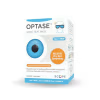


What are the benefits of using heated eye masks?
One of the primary benefits of heated eye masks is the hydration they can stimulate to help with ophthalmological conditions such as dry eyes. “The heat from the mask helps to melt the oil from the meibomian glands, which are oil like glands in the upper and lower eyelids that keep our eyes lubricated and, in turn, feeling comfortable and hydrated,” explains Dr. Ashley Brissette, a New York City-based ophthalmologist specializing in cataract surgery, dry eye disease, LASIK and EVO ICL. “This can help to improve tear film stability, alleviate symptoms of dry eye syndrome and provide soothing relief from eye fatigue.”
In addition to dry eyes, heated eye masks can help treat blepharitis and/or meibomian gland dysfunction (also known as MGD). “Heat helps liquefy meibum (the oily secretion of the meibomian glands), improving tear film quality,” says Early. “I compare this to cold butter vs warmed butter (cold butter doesn’t flow). Meibum is a very important component of a healthy tear film and comfortable ocular surface, so if it isn’t even getting out of the glands, it can’t do its job.”
Furthermore, Dr. Kunal Malik, a New York City-based board-certified cosmetic dermatologist, notes that heated eye masks can help reduce puffiness and dark circles under the eyes by increasing blood circulation to and around the area. Additionally, the heat can help reduce eye strain and tight muscles in the area.
Expert- and editor-approved heated eye masks

Writer Jannely Espinal has been using these masks for two years now whenever her eyes need a bit of help with self-lubrication. “I only wear these masks when I have dry eyes or feel super tired. They warm up in a few seconds after opening the package — which is amazing if you need instant relief. Also, they feature soft ear loops that don’t feel constricting at all. I like to keep a package in my bag for when I take a long flight and need that extra dose of relaxation,” says Espinal.


Associate editor Lauren Witonsky used this eye mask when dealing with a stye and found it to be very helpful: “I went through a stint of recurrent styes, and just couldn’t keep up with the warm compresses — even though I knew that’s what would help my eyes the most. This compress mask made it so much easier since it took just 20 seconds to warm up in the microwave, and the heat lasted much longer than any hot washcloth did.”


If you’re looking for a heated eye mask that you can pop into the microwave for less than 30 seconds before placing it onto your eyes, look no further than this one from Optase. “[This eye mask] utilizes Hydrobead Technology to absorb moisture from the air and release a natural, constant moist heat when microwaved,” says Dr. Anetta Reszko, a board-certified dermatologist and dermatologic surgeon.
This mask only retains heat for about 10 minutes, which is enough (in most cases) for recommended treatment sessions. You can reuse this one for up to six months. Don’t forget to wash and dry it (which can be done with warm water and soap) before placing it in its protective pouch for 24 hours between uses.

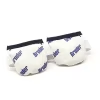
Both Brissette and Early say it’s hard to go wrong with the Bruder Moist Heat Eye Compress. “The Bruder mask is the quintessential heated eye mask most eye doctors will have available for purchase in office,” says Early. “This is a simple, no frills, but effective microwavable eye mask.”
Unlike some other eye masks, this one has two distinct micro-fine sheet patches containing patented medibeads to individually heat each eye for between 10 and 15 minutes (after placing it in the microwave for 20 or 25 seconds).

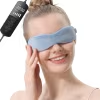
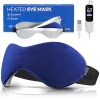
If a heated eye mask with a timer is non-negotiable, consider this one from Ezona. Dr. Debra Jaliman, a New York City-based board-certified dermatologist, recommends this eye mask because it has three temperature control settings (95℉, 113℉ and 131℉) and four timing settings in 15-minute increments up to an hour, so you can choose to create the heating experience that best suits your temperature and timing preferences (adhering to your doctor’s orders, of course). What’s more, this electric heated eye mask (powered by USB via a 6.5-foot cord) evenly heats eyes via gravity beads and far infrared heating.

When it comes to electric heated eye masks, Tsong recommends this one from Aroma. “It’s a heated (and lightweight) eye mask, contains five temperature settings and offers a great price for electric,” he says.
Made with a cotton exterior and a natural flaxseed fill, this small eye mask is able to place heat (between 104℉ to 140℉) on the eye area for more effective results. It is important to note, though, that you can’t move around while wearing this mask (or go too far) as it only works while it’s plugged in.

Although this eye mask may be an investment, Early says it’s worth it for its comfort and convenience. “I personally use CorneaCare’s Rest self-heating eye masks,” she says. “I find them comfortable and convenient to keep at my bedside, and I don’t have to go downstairs to put them in the microwave or remember to charge them. I also find them to be very effective with a comfortable level of heat.” They’re also a favorite of senior editor and producer Julie Ricevuto.
You might be wondering how these heated eye masks work without a microwave or electric output. They’re actually self-heating. These sheets are made with a combination of purified water, carbon, hydrated minerals, ferrous powder and inorganic salts to maintain their warmth while resting on your eyes.

Editor Vivien Moon has been using this mask and has been a fan of how easy it is to incorporate into her daily routine. “I love the adjustable straps and that the eyes are adjustable too, so you can have a proper, custom fit,” says Moon. She adds that it has multiple settings to provide you with the warmth that works for you.


Moon is also a big fan of this portable eye wand that features hot compress technology, which she calls “Very soothing.” In addition to the warming technology, it also has LED lights that help address the appearance of dark circles. However, what Moon loves most about this device is how portable it is and how she can use it while traveling or at home on the couch.

Espinal also uses this dual-relief product, featuring heat and massage settings. “I bought this mask with my FSA funds and it has been one of the best wellness products I’ve acquired. Lately, my eyes have been straining easily due to constant screen use and this has been helping me before sleeping. The massage took me a few minutes to get used to, but it feels so soothing and relaxing — especially when you have a migraine,” she says. The device offers mild compression around the eye area to relieve tension and heat up to 107 degrees Fahrenheit.

How to use heated eye masks and eye massagers
Before you begin using a heated eye mask, it is important to know how much heat you’ll be applying to the area. “It’s extremely important to test the temperature before each time you use it to be careful not to burn oneself,” advises Dr. Jerry Tsong, a board-certified ophthalmologist and medical retinal specialist at Greenwich Ophthalmology Associates.
You also want to ensure that your heated eye mask won’t overheat with time and that you can monitor the temperature during each use. Heated eye masks with automatic shut-off features are best suited to prevent emergencies, especially if you happen to fall asleep or simply forget to turn off your new gadget.
If your heated eye mask is equipped with vibration or massage settings (which some are), keeping those settings off or only using the lightest ones (if approved by your ophthalmologist) is recommended. “People should get their eye massage device checked by their eye doctor,” says Tsong. “They will make sure it is safe before use, and they need to make sure that the massage function does not put pressure directly on the eye. Pressure on the bony areas around the eye is okay.”
As far as fit goes, Reszko notes that your heated eye mask should feel snug without feeling tight. That said, Malik adds that your eyes (and eyelids) should always be closed during each heating session.
Frequently asked questions
How frequently you use heated eye masks should be determined based on any conditions you’re attempting to treat or health goals for which a specific usage plan can be discussed with your doctor.
Early recommends using a heated eye mask at least twice daily for between five and 10 minutes if you’re treating chronic issues or an acute exacerbation.
If you’re looking to relieve some eye strain and help relax the area, Malik recommends applying your heated eye mask for between 10 and 15 minutes, two or three times per week.
Always refer to your specific heated eye mask’s instructions or user manual and consult with your doctor to determine the healthiest frequency of use to meet your needs.
First and foremost, Early notes that you should not use heated eye masks if your doctor (or ophthalmologist) does not authorize your use of them. “People with a history of eye surgery, recent eyelid surgery, history of eye diseases such as retinal detachment/retinal problem [should avoid using heated eye masks] as there is the risk of pressure on the eye causing new problems,” adds Tsong.
In addition to ophthalmological issues, several dermatological issues can potentially be made worse by the heat and pressure of heated eye masks such as rosacea, eczema and psoriasis (especially if they occur within or around the eye area).
How do you add Shop TODAY as a Preferred Source on Google?
Google’s new Preferred Sources feature allows users to manually select their favorite publishers and news outlets for a more customizable experience tailored directly to the reader. Once you’ve opted to receive our content, you’ll begin seeing more of our recent and trending articles displayed within your Top Stories news feed.
The easiest way to add us as a preferred source is to click here and type in “TODAY.com.” Once the box is checked and you’ve refreshed the page, Shop TODAY content will start appearing in your feed.
How we chose the best heated eye masks
To compile our list of the best heated eye masks, we asked for recommendations from the dermatologists and ophthalmologists we interviewed.
Meet the experts
- Dr. Debra Jaliman, MD, is a New York City-based board-certified dermatologist and author of “Skin Rules.”
- Dr. Kunal Malik, MD, is a New York City-based board-certified cosmetic dermatologist and assistant professor at Icahn School of Medicine at Mount Sinai.
- Dr. Jerry Tsong, MD, is a board-certified ophthalmologist and medical retinal specialist at Greenwich Ophthalmology Associates.
- Dr. Alison Early, MD, is a board-certified ophthalmologist and cataract and refractive surgeon based in Cincinnati, Ohio.
- Dr. Anetta Reszko, MD, is a board-certified dermatologist and dermatologic surgeon and clinical assistant professor of dermatology at Weill Cornell Medical College.
- Dr. Ashley Brissette, MD, is a New York City-based ophthalmologist specializing in cataract surgery, dry eye disease, LASIK and EVO ICL.


