

My first summer living in New York City, I tried to last without an AC unit because I didn’t believe in spending the money. I made it to early June before I left for cooler temperatures (aka central AC at my parents’ home in the suburbs). I wish I knew back then that portable AC units existed which are: 1) way easier to set up than a traditional air conditioner, and 2) a fraction of the cost.
This summer, I’m spending it in the city in an apartment with no AC in the living room, so I decided it was finally time to put some portable AC units to the test to see what the hype was about.
We also asked electricians about everything you need to know when it comes to installation, use and upkeep of portable air conditioners. Keep reading to find out which ones took my sweat away on some of the hottest days of the year so far.
 Best for tall ceilings$389.00$499.00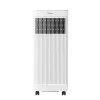


What to know about portable AC units, according to experts
Deon Marecheau, owner of Antillean Restoration, says these are the things you should be paying attention to when shopping for a portable air conditioner:
- Hose design: “A single-hose unit can absolutely work fine for a bedroom or smaller space, but it’s generally less efficient because it creates negative pressure in the room, which can pull warm air back in from other areas,” he says. “Dual-hose models tend to cool more efficiently because they reduce that issue.”
- SACC (Seasonally Adjusted Cooling Capacity) rating over just the advertised BTU numbers, which he says “gives a more realistic picture of actual cooling performance.” He also says a stronger SACC rating help indicate a unit that will draw less electricity.
- Noise level: Because nothing is worse than a unit that’s so loud, it’s distracting.
- Additional modes like a dehumidifer mode which may be helpful for muggy days or an eco/sleep mode which typically draws less electricity.
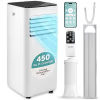
Best overall portable AC


Ease of installation: 4.5/5 | Noise level: 5/5 | Weight/portability: 5/5 | Cooling ability: 4.5/5 | Overall average score: 4.75/5
I tested this portable AC unit on one of the hottest days I have seen so far this year (90 degrees and sunny). Initially, I had really low expectations because it was the smallest one of the bunch I tested, but this one blew me away (no pun intended).
It was super easy to unbox and came with everything I needed. It even came with the hose attached to the vent attachments, so you don’t have to go through the pain of trying for several minutes to put them together (like I did with some of the other models I tested). The device itself had really durable wheels that made it very easy to move around, and it had handles on the side so lifting it was easy.

It took me a total of 20 minutes to completely set up the machine from the box to the window. The window panel is shorter than the other ones I tried, so it fit flush to my window and I didn’t need any extra foam to plug gaps.
Once turned on, it was easy to figure out how to use the machine. It has pretty seamless settings: cool, fan, dry and sleep. The remote and app — which functioned as a sort of virtual remote — made it very easy to toggle between these features.

I appreciated that the vents the air flows out of were easy to turn and move around so you can achieve your desired angle. It wasn’t noisy at all and didn’t have that alarming rattling sound some traditional air conditioners tend to have. It also came with a draining hose to make the process simple.
Most importantly, I was astounded by how cool it made my living room. It took the space from 76 to 71 degrees in just about an hour and a half on the cool setting.
Another positive to note: The brand says it uses less energy than a washing machine. That was a very welcome tidbit for me because one of the other portable air conditioners I tested actually caused my breaker to trip!
Other portable AC units to try, tested by the author
Best for tall ceilings:

Ease of installation: 4/5 | Noise level: 4.5/5 | Weight/portability: 4/5 | Cooling ability: 4/5 | Overall rating: 4.13/5
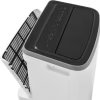
The Frigidaire portable AC unit was bigger than I was expecting and was a little bit hard to maneuver since it was so wide. The vent panel for the window was a little bit hard to fit and I actually had to cut the panel itself to be able to fit it in my window.
After fitting in the window, I secured a few gaps with sticky foam that came with the device to ensure the space was fully sealed. The hose on this device was a little less sturdy than the others but after a few tries, I was able to attach it to the vents and window panel. In total, it took me about 23 minutes to set up. It also came with a hose to make the draining process easy.

Once it was on, I was able to switch between different settings — cool, dry, fan and auto — with ease via the buttons on the machine. It also came with a remote to help you adjust the settings from afar.
The app allows you to set up unique schedules like sleep mode or specific times you want the AC unit to run. This can be particularly helpful for those times when you’re out of the house and want your air conditioner to start the cooling process before you get home.
The wheels were easy to maneuver on carpet and hardwood, but the machine itself was heavy to lift. The vent on the device where the air flows out of can be moved up and down manually, but not side to side. So you’ll have to angle the whole machine if you want it blowing left or right. If you have tall ceilings, this machine is great because it is able to shoot air straight up, making the air go a bit further in a room.

It was pretty noisy so it does take some getting used to if you have a TV next to yours like I did. Its cooling capabilities were pretty good, taking my living room from 79 to 74 degrees in about two hours on the cool setting. However, I didn’t feel that same icy chill like I did with the SereneLife unit.
Best for small spaces:

Ease of installation: 4/5 | Noise level: 4/5 | Weight/portability: 4/5 | Cooling ability: 4/5 | Overall average score: 4/5
If you are lacking a lot of real estate for a portable AC unit, this one is a solid option. It is tall but slim and doesn’t weight a ton. It was pretty easy to move around, but the wheels were a little weak on carpet versus hardwood flooring, so you’ll have to take your time transporting it.
While this unit performed well, the instruction manual was pretty hard to follow, so I ended up having to watch a YouTube video to make sure I was installing it correctly. I appreciate that it came with a lot of foam because I ended up needing to line the top and bottom of my windows to ensure it was completely sealed. All in all, it took about 25 minutes total to set up.

Once plugged in, I turned it on and flipped through the settings to familiarize myself with the device. It had the standard cool, dry, auto and fan settings to choose from and had different sleep modes. There was even an option to set a timer. The app was also easy to use and perfect for controlling the machine when you’re in another room or away from home.
It took my home from 70 to 66 degrees in about an hour and a half. However, it’s important to note that on this day, it wasn’t particularly hot.
The device was a little loud, but after about 30 minutes, the noise seemed to blend into the background. Unlike the other units I tested, the vents in this machine were not adjustable, so you have to move the entire machine to direct air flow. While the cool air did reach the furthest parts of the room, it remained coolest right around the machine, which makes it more ideal for smaller spaces.

Frequently asked questions
David Long, CEO of the National Electrical Association, says, "Try the AC unit in another outlet and if it trips again, either get a new AC unit that’s drawing less power or call an electrician to check your outlets and breaker."
No. A portable AC unit should be the only thing plugged into an outlet, advises Long.
"Most units just need a window, the included exhaust hose and window kit and a standard outlet," Marecheau says.
He emphasizes how important proper sealing around the window is because "poor installation can seriously reduce efficiency."
“For most households, filters should be cleaned every 2–4 weeks during active use. If you have pets, dust or allergies, more often is better. Clean filters help with airflow, efficiency and overall performance,” says Marecheau.
How we tested the portable AC units
I tested the portable AC units on some pretty warm days this spring. For reference, my living room has no AC unit and gets pretty hot (up to 87 degrees in the summer). I had a portable thermometer that was able to measure the temperature and humidity of my living room before and after using each unit.

When testing, I made sure to turn off all of the AC units in the bedrooms of my apartment and close the doors so the living room was as isolated as possible. My living room space opens up into the kitchen for a total of around 500 square feet.
Before testing each unit, I took note of the temperature in the room. I then timed myself unboxing and setting them up. If the instructions that came in the box were unclear, I searched for YouTube videos for additional guidance.

Once installed, I turned on the units, exploring various modes and settings. If there was a companion app, I downloaded that and evaluated how easy it was to both set up and use.
While the air was flowing, I checked the thermometer about every 15 minutes to see how long it took to adjust the temperature to one that was noticeably cooler. I would also stand around different parts of the room to see how the air would hit me outside of the direct vent line. By the end of testing, I recorded the final temperature and made note of how easy it was to drain.
Why trust Shop TODAY
Annie Shigo is an associate editor at Shop TODAY. She joined the team in 2023 and has covered everything from fashion trends to cleaning product staples. She has tested several other types of home products for Shop TODAY’s Ranked series, including steam mops, toilet bowl cleaners, dusters and more.
Meet the experts
- Deon Marecheau is the owner of Antillean Restoration, a full-service general contracting company in Kutztown, Pennsylvania. He is also on the Pro Advisory Board for Thumbtack, a website that connects users with home industry professionals.
- David Long is the CEO of National Electrical Contractors Association. He has been in the electrical construction industry since 1975.


