

When it’s the end of the day and it’s time to get so fresh and so clean clean, the last thing you really want to see when you hop into the shower is a showerhead that’s so dingy and so yuck yuck. Well, that or Anthony Perkins circa 1960, but I digress.
But there's good news for those of us that tend to defer our maintenance chores: with a little time, love and vinegar, your showerhead could be back to waterfall-like condition in a jiffy, says Roisin Smith, a professional cleaner at Wecasa, a UK-based at-home services company.
We asked Smith and Jessica Blalack, co-founder of Jessie Clean, about everything you need to know to get your showerhead back in tip-top shape, so you can shower in peace.
 Multi-surface cleaner$undefined$13.99


How often should you clean your showerhead?
If you were to ask my mom, the answer would be anytime anyone looked at the thing. But our pros recommend light monthly cleanings via a vinegar soak and a good deep clean every three to six months. This is especially important for areas with hard water.
“Regular maintenance extends the life of the fixture and ensures better water pressure and hygiene” says Blalack.
How to clean a showerhead
Descaling your showerhead may sound like a job worthy of heavy machinery or a chisel, but the real solution to showerhead brilliance may be no further than your kitchen pantry, says Smith.
She recommends using white vinegar and following these steps to descale:
- Remove the showerhead.
- Soak it in a bowl or bag of white vinegar for a few hours or overnight.
- Rinse thoroughly with warm water.
If you can't or don't know how to remove your showerhead, all is not lost, says Blalack. These are the steps you'll want to follow:
- Fill a sandwich bag with white vinegar, place it over the showerhead so it’s fully submerged and secure it with a rubber band.
- Let it soak for several hours or overnight.
- Remove and rinse thoroughly.
"This method dissolves mineral deposits gently without harsh chemicals,” she adds.
On occasion, you may need to give the vinegar a little assist and bring out the heavy-yet-gentle artillery. “Use a soft toothbrush or cloth to gently scrub any remaining residue,” advises Blalack.
“Focus on the tiny holes where water comes out, as they’re often the most clogged,” notes Smith. “If you have really stubborn areas, poke into the nozzles gently with a pin or needle to dislodge any mineral buildup that might be blocking water flow. Then rinse and run the hot water to clean completely.”
If a needle isn’t readily available, a toothpick or a cotton swab can also come in handy when digging out those stubborn clogs, adds Blalack.
Do's and don'ts for cleaning your showerhead, according to experts
Don't:
- Use abrasive tools. “Steel wool, rough scrubbers can scratch or damage finishes,” says Blalack.
- Use harsh chemical cleaners like bleach or ammonia as these could be impactful on your health.
- Forget to rinse thoroughly. “Leftover acids can degrade materials over time,” says Blalack.
Do:
- Check your finish. “Brass, gold and matte black can be sensitive to vinegar or citric acid,” says Blalack. She recommends spot testing prior to going all in on your cleaning method or consulting the manufacturer.
- Lay a towel in the sink or tub when removing or handling your showerhead. This little bit of prep will go a long way in avoiding chips or scratches on your fixtures.
It’s a grimy job, but someone has to do it. If that someone is you, these tips and tricks shared by our experts will help you restore your showerhead's sparkle and shine.
Best products for cleaning your showerhead, according to experts
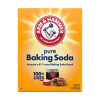
Arm & Hammer Pure Baking Soda

- Has multiple uses
- Can be messy
Size: 1 lb
If vinegar, a toothbrush and little elbow grease don’t seem to be getting the job done, don’t toss your showerhead out with the bathwater just yet, say the experts.
“If you really want to see a difference fast, make a paste of baking soda and water,” advises Smith. “Apply it to the showerhead before the vinegar soak and let it sit for 10–15 minutes. It helps lift grime and soap scum, which could potentially be stubborn.”
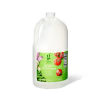
Good & Gather White Distilled Vinegar

- Multiuse product
- Cost effective
- May need more for tough stains
- Smell is not for everyone
Size: 128 fl oz
When it comes to cleaning showerheads, you just can’t lose when you go with good ole white vinegar. Blalack describes it as “affordable, accessible and highly effective at dissolving mineral buildup without toxic fumes.”
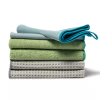
Everspring Multi-Surface Microfiber Cleaning Cloths

- Reusable
- Machine-washable
- Color may bleed on first wash
Amount: 6
Microfiber cloths are good to have on hand for a variety of household chores — including cleaning your showerhead! When paired with an old toothbrush, this dynamic duo gets the job done all without damaging your fixtures, according to Blalack.
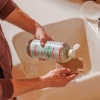
Dr. Bronner’s Sal Suds Biodegradable Cleaner

- All-surface cleaner
- Biodegradable ingredients
- Works with soft and hard water
- Some have had issues with cap
- Scent may become light
Size: 32 fl oz
I like this product just on the name alone. However, Blalack likes it for its pH-neutral composition and its ability to be used safely on a variety of finishes. She also says it's ideal for regular showerhead wipe downs.
BioClean Hard Water Stain Remover

- Biodegradable formula
- Removes several stain types
- Multi-surface use
- May need a little elbow grease
Size: 40 oz
Need a little more umph and speed to your cleaning process? Blalack knows just the thing.
“For a quicker clean and extreme hard water removal, we recommend BioClean, a non-toxic cleaner that breaks down limescale and buildup. It’s safe for most finishes and works well in tandem with vinegar,” she says.
“BioClean is excellent for stubborn hard water deposits, especially on glass shower doors and fixtures,” she adds.
Frequently asked questions
Use a splash of lemon. “If vinegar isn’t an option, fresh lemon juice can work in a pinch, especially on chrome fixtures,” says Blalack.
- Silicone nozzle showerheads: Smith says these are excellent in warding off limescale. “The nozzles are made of soft silicone, so you can just rub them with your fingers to break off limescale, which are great for hard water areas.”
- Detachable and handheld showerheads: Blalack says they are "the easiest to clean since you can soak them in a bowl and reach all areas.”
- Stainless steel and chrome-plated showerheads: “Smooth finishes are more resistant to soap scum and hard water marks than textured or matte ones,” shares Smith. “You should wipe with a microfiber cloth after each use to keep it shiny.”
While HGTV may be giving you multi-spray and rainfall showerhead dreams, our pros might need to "rain" on your parade with a sprinkle of reality.
“Multi-spray and rainfall heads tend to clog more quickly and are trickier to clean due to their design,” says Blalack. “It can also be difficult to reach the tops of these types of showerheads without using a step stool or using extended tools.”
How we chose
Shop TODAY gathered insight from experts in the field on best practices and product recommendations when it comes to cleaning and maintaining showerheads.
Meet the experts
- Roisin Smith is a professional cleaner at Wecasa, a UK-based online booking platform which offers home-based services for cleaning, wellness, beauty and more.
- Jessica Blalack is the co-founder of Jessie Clean, a women-owned residential cleaning service based in Indianapolis, IN.


