


Ever since we first started going to the dentist, we’ve been hearing about the importance of flossing, but that doesn’t make this simple task any less annoying. Flossing only takes two minutes, but it’s one of those steps in our bedtime routine that many tend to dread because we’re strapped for time or can’t stand it when our gums bleed.
Still, flossing is pretty important and it can even help prevent a range of dental issues. So this year, Shop TODAY is vowing to give it another try. While string floss may be the gold standard, there are now tons of alternative products on the market to make the task more tolerable. From water flossers to dental picks to the newest addition to the category — electric flossers — we’re rounding up our picks to keep your oral hygiene in tip-top shape.
To help jumpstart our flossing routine, we consulted the pros for some technique tips and even asked them to share a few of their favorite products to make flossing more bearable. Keep scrolling to polish up those pearly whites!
 Expert pick$undefined$9.97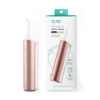


Why is flossing important?
“Flossing is essential to maintaining a healthy smile, protecting your teeth and gums and preventing yourself from exposure to other dental-related complications,” Dr. Jasmin Henville, DMD, Aspen Dental practice owner in MA, says.
This often-ignored task also has a range of other lesser-known benefits. It might not seem like a big deal to leave some food remnants in between your teeth, but when left unattended, bacteria can build up and form plaque.
“Plaque biofilm can become unhealthy, turning into a virtual ‘petri dish’ for bacteria that can begin to express themselves harmfully (called pathogenic bacteria). This leads to the progression of gum disease,” biologic dentist and founder of Rejuvenation Health and Rejuvenation Dentistry, Dr. Gerry Curatola told Shop TODAY.
It takes more than a toothbrush to properly remove plaque, and flossing can keep your teeth and gums strong and help prevent cavities.
Expert- and editor-approved flossing products

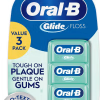
Traditional floss is a medicine cabinet essential, and Dr. Jennifer Jablow, a celebrity dentist and founder of the teeth whitening brand intelliWHITE, swears by this one that’s focused on comfort. “It gets into the tightest spots and doesn’t hurt like others can if your gums are sensitive. If you are cavity-prone, put a small bit of your toothpaste on the floss to help get it into the tight areas where the toothbrush misses,” she says.


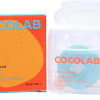
Prefer natural products? There are plenty of dental brands focused on clean ingredients. “If you have trouble sliding the floss between the teeth, try a natural waxed floss that goes between teeth more easily. This one from Cocofloss is made from coconuts,” Curatola says.
Social media video producer Anita Chomenko is also a fan after hearing about it from her dental hygienist during a cleaning. “ I am genuinely passionate about the Cocolab Coco Floss,” says Chomenko. “The reason why it works so well is that the floss reacts to saliva, so when you use it, it expands in between your teeth and gets everything.”

Need something a bit more heavy-duty than string floss? Curatola swears by proximal brushes. “Often shaped like small Christmas trees, these brushes can fit in the embrasure space at the gum line between teeth for effective removal of interdental plaque biofilm,” he says.

If you have tight teeth, braces or dental bridgework, flossing isn’t always so easy. That’s where floss threaders come in handy. “These devices ‘thread the floss’ — similar to a needle and thread — and are very effective to get through and/or under a closed contact area,” Curatola says.

If you’re looking to branch out from traditional floss, floss holders are a nice way to switch things up a bit. “They have a handle to hold, and are often made with pre-loaded floss to slide between teeth,” Curatola explains.

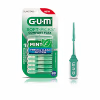
“Pre-threaded floss holders are convenient and great for when you’re on the go or if you have trouble holding floss between your fingers,” Henville says. These ones from Gum have an F-shaped handle that’s easy to grip and can easily clean out those teeth in the back of your mouth that are hard to reach.

Dental picks, in particular, can do a lot more than remove plaque. Henville prefers these ones from Gum that come with an on-the-go storage case. “Dental picks are made of wood or plastic and are specially designed to remove plaque and stimulate blood flow in your gums,” Henville says.

According to Jablow, the most efficient way to floss is with a water flosser, and this one wins the dentist’s seal of approval. “I like this cordless, rechargeable Waterpik flosser. It’s easy to handle and takes up little counter space,” she explains.


Senior commerce editor Julie Ricevuto loves this water flosser from Quip. “It’s pretty small, so it doesn’t take up much space on my counter, and it really gets in tough-to-reach spots for a deep clean,” she says.
Editor Vivien Moon agrees, adding that the cordless model makes all of the difference. "I finally got my hands on one that didn’t have a chord (I tried one with a cord before and it was so difficult to work with) and I’ve fallen in love with it. Because it’s rechargeable, I don't have to worry about batteries," she says.


I [Witonsky] am a fan of this floss for several reasons. First, the black color makes it easy (and satisfying) to see the plaque being removed. Second, it’s PFAS-free, which helps prevent exposure to though forever chemicals — especially for a product you use every day. And third, the mint flavor leaves my mouth feeling fresh!

You’ve heard of an electric toothbrush, but how about an electric flosser? This new model on the market has associate editor Kamari Stewart-Jackson’s stamp of approval.

“Water flossers use a stream of water to clean between teeth and are a good option if you have trouble with your grip, have braces or have had other treatments like implants or bridges,” Henville says. AquaSonic’s water flosser is an affordable cordless, rechargeable option that includes five tips and three operating modes.

Deputy managing editor Jess Bender has owned this water flosser for over a year and is extremely pleased with its performance so far. “It comes with 10 modes of intensity, plus a massage option for stimulating my gums, plus seven floss heads that serve different purposes,” she says. “Over time with regular use, I’ve noticed my gums becoming less sensitive and have overall less plaque buildup versus my experience with other water flossers.”

Looking for a sleeker option? After a bulky water flosser was taking up too much space on her counter, Stewart-Jackson switched to this one from Bitvae — and doesn’t think she’ll ever go back to any other model. “I love that it’s cordless, easy to refill and the battery lasts a long time,” she says. “It has several settings (I usually keep it to the gentlest clean setting because my gums are sensitive) but it’s easy to maneuver and lightweight.”

How often should you floss?
You might only go to the dentist once or twice a year, but it’s the day-to-day maintenance that keeps your teeth in good shape, and flossing daily is a huge part of that.
“The formation of interdental plaque biofilm forms approximately every 24 hours, so minimally, you should floss once daily. However, it’s a good idea to floss both morning and night as the accumulation of food debris between teeth is a ripe environment for the formation of unhealthy plaque biofilm,” Curatola explained.
If you ever feel lazy and don’t want to carve out two minutes to floss, consider this analogy from Curatola: “I often compare leaving food debris between teeth to leaving garbage between buildings on a New York City side street on a hot summer day. Before you know it, it stinks and the rats come out to feed on it (yuck!).”
How to get better at flossing
Flossing isn’t rocket science, but finding the right technique that works for you does take a bit of trial and error. We asked the pros to share a few of of their best tips:
Know the basics: “Hold the floss tightly between the thumbs and forefingers and gently insert it between the teeth. Curve the floss into a ‘C’ shape against the side of the tooth,” Henville says.
Be gentle: “Do not snap the floss between teeth. Instead, gently slide ‘back and forth’ on the sides of each tooth in a gentle ‘lasso’ by rubbing the floss along the sides of the teeth before gently removing the floss through the contact of the two teeth,” Curatola says.
Use enough floss: “Use about 18 inches of floss wound around one of your middle fingers, with the rest wound around the opposite middle finger,” Henville says.
Baby your more sensitive teeth: “Never ‘yank’ or pull the floss back up quickly between your teeth, especially under a crown, inlay, filling or any other dental restorations,” Curatola says. “Instead, gently slide the floss down towards the gum margins of each tooth and when finished cleaning the sides of the teeth, simply pull the floss straight out and do not pull back up towards the top of the tooth called the marginal ridge.”
How we chose the best flossing products
At Shop TODAY, our reporters interview a range of qualified sources and experts to capture a wide scope of perspectives on a given topic. We also make sure that all expert guidance and recommendations are made independently and with no undisclosed financial conflicts of interest. We based our picks for the best flossing products on expert-recommended and editor-tested products.
Meet the experts
At Shop TODAY, our reporters interview a range of qualified sources and experts to capture a wide scope of perspectives on moisturizers for oily skin. We also make sure that all expert guidance and recommendations are made independently and with no undisclosed financial conflicts of interest.
- Dr. Jasmin Henville, DMD, is an Aspen Dental practice owner in MA.
- Dr. Gerry Curatola is a biologic dentist and founder of Rejuvenation Health and Rejuvenation Dentistry.
- Dr. Jennifer Jablow is a celebrity cosmetic dentist and founder of the teeth whitening brand intelliWHITE.

Ninja BlendBoss Tumbler Blender


Ninja BlendBoss Tumbler Blender
